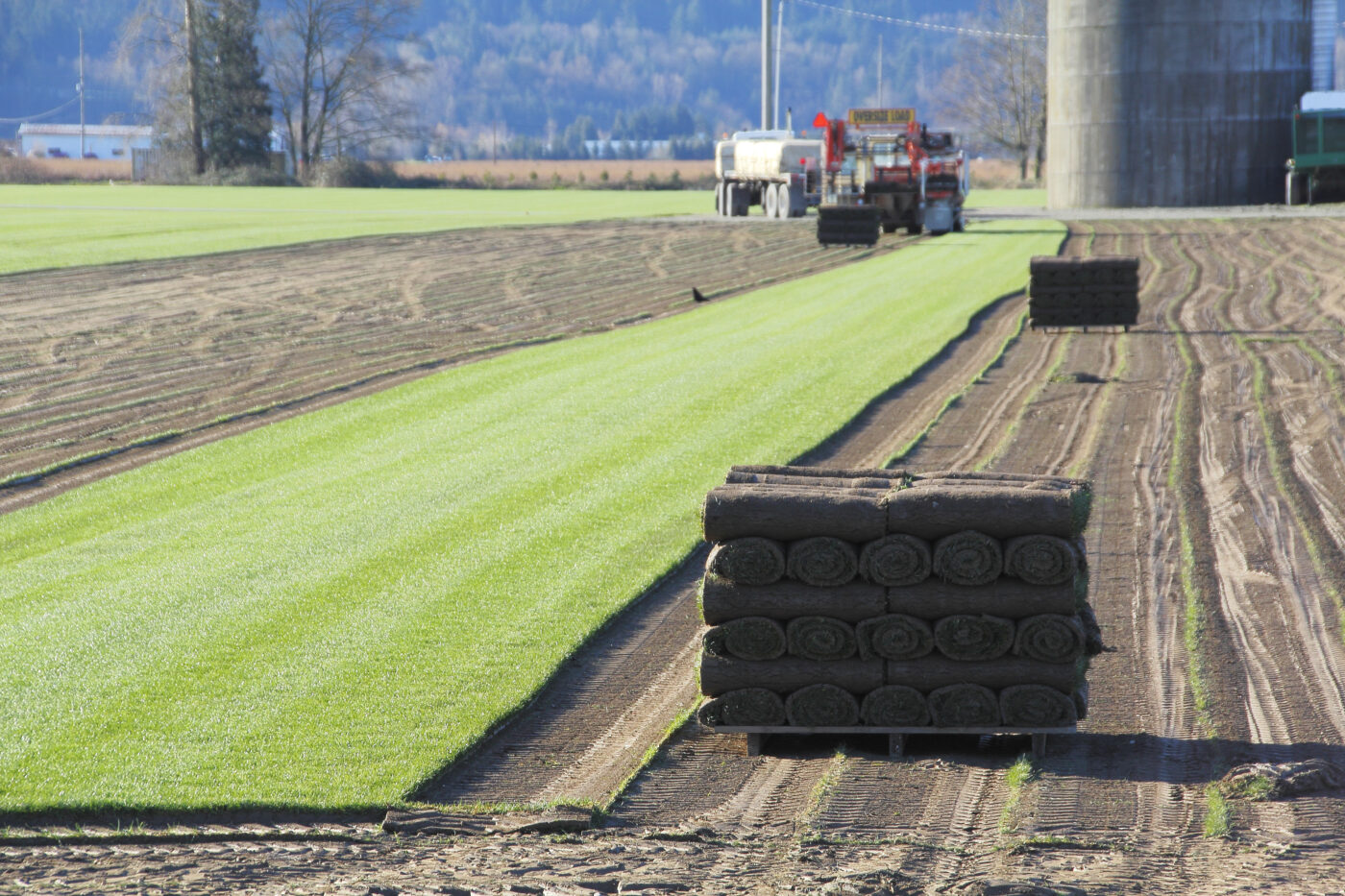
The agricultural and turf management industries stand at the forefront of a technological revolution. Agricultural equipment manufacturers are developing groundbreaking solutions that transform how we manage land, grow crops, and maintain professional turf areas. From autonomous tractors guided by precision GPS systems to electric zero-turn mowers and advanced no till drills, today’s agricultural tools represent the pinnacle of engineering innovation designed to boost productivity while advancing sustainability goals.
The global agriculture equipment market is experiencing strong growth, fueled by widespread adoption of advanced technologies designed to address labor shortages, environmental sustainability, rising input costs, and the growing demand for food. Innovations like automation, precision tools, and eco-friendly designs are key drivers behind this upward trend.
Professional turf products and commercial aerators have evolved far beyond basic maintenance tools. Modern equipment integrates sophisticated sensors, data analytics, and automated systems that deliver unprecedented precision in turf care. Meanwhile, agricultural tools continue advancing toward full automation, with manufacturers developing equipment that can operate independently while making real-time decisions based on field conditions.
Meeting Modern Farming Demands with 1st Products Equipment
Performance-Driven Design for Real-World Challenges
Modern agriculture brings daily challenges like rising labor costs, unpredictable weather, and the constant pressure to increase efficiency without compromising sustainability. 1st Products builds equipment that directly responds to these needs. From turf managers maintaining pristine surfaces to farmers working in no-till systems, our machines are engineered to solve problems in the field, not in theory.
We are known for tools that deliver measurable impact. The AERA-vator breaks through compaction without disturbing the surface, improving soil health and plant performance. The MULTI-drill supports accurate seed placement across tough terrain, making it ideal for conservation tillage and food plot preparation. Our products work harder so you don’t have to.
Innovation Through Modular, Multi-Function Tools
Where some manufacturers produce single-purpose machines, 1st Products focuses on modular equipment that gives you flexibility season after season. Our C-7000 Module Spears convert existing frames into core aerators for cotton and other row crops. The VERTI-cutter makes thatch removal and turf renovation more efficient with adjustable blade depths.
Modular design lowers the cost of ownership and simplifies maintenance. Whether you’re aerating, seeding, or fertilizing, you can adapt your setup with interchangeable components instead of investing in entirely new machines. This flexibility helps operators manage labor, reduce downtime, and optimize field performance without waste.
Built for Professionals Who Demand More
1st Products equipment is built for professionals in agriculture, turf, and land management who need consistent results. Every unit is manufactured in the USA, backed by real-world testing, and supported by a knowledgeable team that understands your workflow and your deadlines.
As demand grows for equipment that works smarter and lasts longer, 1st Products remains committed to delivering agriculture and turf solutions that make a measurable difference. From precision seeding to soil improvement, our machines help you protect your resources while growing your operation.
Precision Agriculture and GPS-Guided Efficiency
GPS-Guided Systems That Improve Field Operations
Precision agriculture has transformed how growers manage land. GPS-guided tools now allow for accurate seeding, fertilizing, and aeration across variable terrain. This technology improves productivity by reducing overlap and skips, helping operators save fuel, minimize waste, and treat only where needed.
1st Products equipment is designed to align with GPS-assisted practices. Tools like the MULTI-drill pair well with precision platforms, offering consistent seed depth and spacing when used with a properly calibrated tractor system. The result is more uniform crop emergence and reduced rework—key goals in any precision strategy.
Real-Time Accuracy with RTK and Field Mapping
Real-Time Kinematic (RTK) GPS networks enable centimeter-level accuracy for planting, spraying, and soil treatments. This allows land managers to create precise field maps and carry out operations with repeatable, data-driven accuracy.
While large-scale operations have fully autonomous tractors, smaller farms and turf managers can still benefit from pairing RTK technology with compact, high-performing tools like the AERA-vator, which breaks up compaction without aggressive tillage. By following GPS-guided passes, users can ensure even coverage and efficient input application across turf, food plots, or crop fields.
Precision Application with Variable Rate Equipment
One of the biggest benefits of GPS guidance is the ability to use variable rate technologies (VRT). Whether applying seed, fertilizer, or amendments, equipment must respond to changes in field conditions. 1st Products’ tools are built with adaptability in mind. The MULTI-drill, for instance, allows for variable seed rates and depth control, making it ideal for conservation practices that rely on site-specific management.
When paired with modern tractor systems, 1st Products equipment helps maximize input efficiency while supporting soil health and long-term sustainability. The shift from one-size-fits-all to field-specific treatments is what makes precision agriculture such a game-changer—and it’s a direction that 1st Products is proud to support with American-made tools that perform where it counts.
Automation in Agriculture: Smarter Equipment for Real-World Results
Why Smarter Equipment Matters More Than Ever
The rise of automation in agriculture reflects a clear industry need: do more with fewer resources. Labor shortages, rising input costs, and sustainability demands are accelerating the shift toward smarter, more efficient equipment. For many growers and land managers, full autonomy isn’t necessary—what they need is equipment that reduces manual labor, integrates with GPS systems, and performs multiple tasks with minimal oversight.
At 1st Products, our tools are built to support that shift. From seeding to aeration, we offer durable, versatile implements that enhance modern workflows, whether operated manually or with precision guidance from a tractor system. This flexibility is ideal for producers who want the benefits of smarter farming without the complexity of full automation.
Modular Tools That Support Automated Workflows
Autonomous technology is impressive, but its high cost and complexity aren’t feasible for every operator. 1st Products bridges the gap by offering modular equipment that complements partially automated systems. For example, the MULTI-drill enables GPS-guided no-till seeding across food plots and row crops, while the AERA-vator improves soil structure without requiring deep tillage—perfect for pre-programmed passes.
These tools require fewer manual adjustments, respond well to tractor-based control systems, and are built for repeatable results in variable conditions. The result is increased efficiency, reduced operator fatigue, and more consistent field performance.
Electric and Efficient Operation
While the market for electric tractors continues to grow, many operators are focusing on implement-level efficiency. 1st Products equipment is designed to minimize fuel consumption by reducing the number of passes needed, improving task efficiency, and requiring less horsepower to operate. This makes it easier to pair with electric or lower-HP tractors as sustainable practices become more widespread.
Operators benefit from fewer engine hours, lower fuel costs, and the ability to perform tasks like seeding or aerating in fewer trips—without sacrificing quality.
Sustainable Farming Through Smarter Inputs
Precision and sustainability go hand in hand. Equipment like the MULTI-drill and AERA-vator helps reduce over-application of seed, fertilizer, and pesticides by delivering more accurate results. By improving soil contact and minimizing compaction, these tools support healthier root systems and more resilient crops—all with fewer inputs.
Rather than replacing operators, smart tools from 1st Products empower them to make better decisions and achieve better outcomes, season after season.
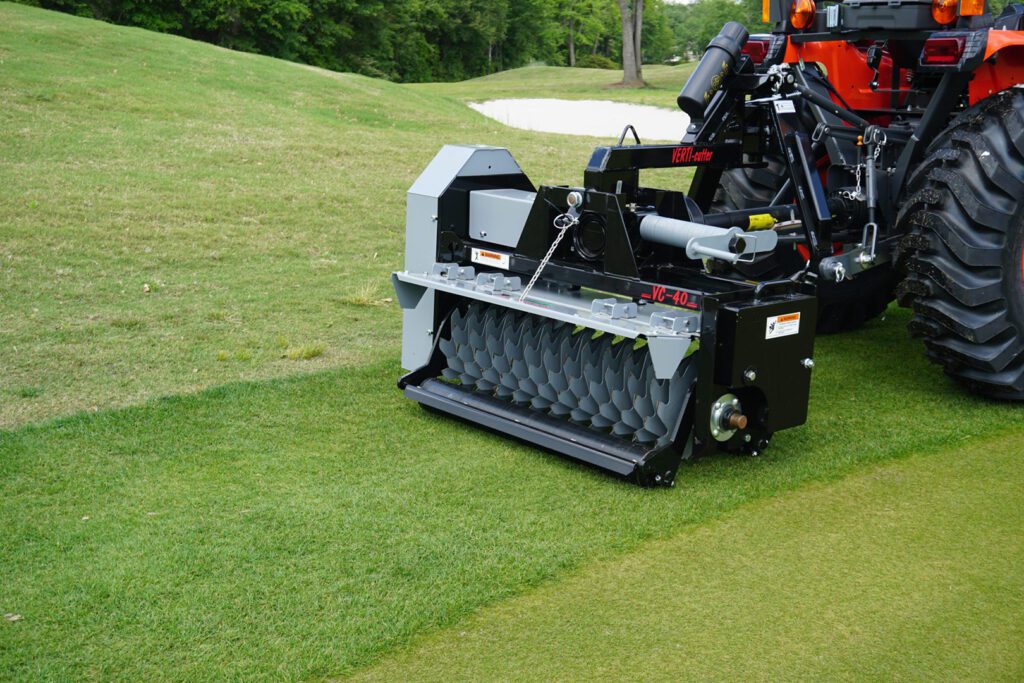
Professional Turf Equipment Innovations
Smart Turf Tools Built for Performance
Today’s turf professionals face increasing pressure to maintain top-quality landscapes with fewer inputs and tighter schedules. From golf courses to municipal parks, crews are turning to smarter tools that reduce labor, improve soil health, and extend turf life. That’s exactly where 1st Products stands out.
Instead of focusing on mowing, our lineup supports the foundation of healthy turf: aeration, dethatching, and seeding. Tools like the AERA-vator loosen compacted soil without damaging the surface, improving water and nutrient flow. Our VERTI-cutter reduces thatch and promotes strong regrowth—crucial for sports fields, golf courses, and other high-traffic areas.
Commercial-Grade Durability and Flexibility
Turf managers need tools that work in real-world conditions—rocky soil, clay-heavy fields, and turf stressed by heat or foot traffic. 1st Products equipment is built from heavy-duty components, with adjustable settings to customize blade depth, spacing, and vibration frequency depending on turf type and seasonal conditions.
Our turf implements mount to standard tractors and can be used with GPS-guided passes for consistent, repeatable results. Whether you’re prepping athletic fields or improving drainage in problem areas, our equipment delivers the performance of larger machines with the precision turf care professionals expect.
Operational Advantages Beyond the Basics
Unlike traditional maintenance tools that require multiple passes, 1st Products turf equipment often completes the job in one. This reduces compaction, saves fuel, and allows for more sustainable turf management across large campuses or tight-access spaces.
Crews also benefit from reduced maintenance time and interchangeable components that allow quick field-side adjustments. Whether you’re managing a sports complex or school system, our tools are engineered for quiet, clean, and effective operation, even in noise-sensitive or restricted environments.
Commercial Aerators and Soil Health Management
Smarter Aeration for Healthier Turf
1st Products knows that healthy turf starts with healthy soil. That’s why our aeration equipment is built to break through compaction and create the ideal environment for root development. The AERA-vator uses vibrating tines to fracture the soil laterally, improving water infiltration, nutrient uptake, and overall turf resilience—without disturbing the surface.
This approach makes it a top choice for professionals managing sports fields, golf courses, municipal grounds, and any high-traffic turf. By minimizing surface disruption and maximizing sub-surface aeration, the AERA-vator delivers results that traditional spike or drum aerators simply can’t match.
Precision Where It Counts
Our commercial aerators integrate seamlessly with GPS-guided tractor systems, allowing for mapped treatment paths and consistent coverage. Adjustable depth and spacing settings make it easy to match applications to real-time field conditions.
For agricultural operations needing flexible aeration across row crops or forage systems, the C-7000 Module Spears provide a modular upgrade option. These spears transform existing toolbars into powerful core aerators—giving you the functionality of a larger machine without the additional capital investment.
Built for Long-Term Turf Health
Soil compaction caused by foot traffic, equipment, and irrigation can quickly lead to shallow root systems, poor drainage, and weak turf. Effective aeration alleviates compaction, allowing oxygen, moisture, and nutrients to reach deeper into the root zone—improving turf health and helping landscapes bounce back faster after stress.
Understanding the relationship between soil health and proper aeration techniques becomes essential for maintaining high-quality turf areas that can withstand heavy use while maintaining aesthetic appeal.
No-Till Drill Technology and Sustainable Agriculture
Soil Health Benefits of No-Till Systems
No-till farming is a cornerstone of sustainable agriculture, helping to protect and rebuild soil over time. By placing seeds directly into undisturbed soil, no-till systems preserve natural soil structure, support microbial activity, and improve organic matter retention. These benefits grow even stronger when no-till practices are combined with cover crops and conservation strategies.
Healthier soil retains more moisture, reduces runoff, and becomes more resilient in the face of extreme weather. As farmers adopt soil-first strategies, no-till has become a key tool for improving productivity while preserving long-term land health.
Environmental Impact and Conservation
No-till systems significantly reduce erosion—by as much as 80%—keeping topsoil and nutrients in place. This not only protects yields but also safeguards nearby water sources from sediment and runoff. No-till also plays a role in climate-smart agriculture by reducing the need for repeated tillage passes, thereby lowering fuel use and keeping carbon stored in the soil.
By minimizing disruption, no-till helps build a more balanced ecosystem in the field while reducing environmental impact and improving field consistency.
Economic Benefits of No-Till Operations
The operational savings from switching to no-till are significant. Fewer equipment passes mean less time in the field, lower fuel consumption, and reduced wear and tear on machinery. For example, eliminating one tillage pass on a 1,000-acre farm can save over 60 work hours and thousands in operating costs each season.
Beyond those immediate savings, the long-term gains—like better soil health, improved water retention, and more consistent plant stands—contribute to higher input efficiency and reduced risk.
No-Till Drill Equipment Selection
Choosing the right no-till drill equipment is critical to making the system work. At 1st Products, the MULTI-drill is purpose-built for tough no-till conditions, with features like adjustable seed depth, high down pressure, and residue management that allow for consistent performance across variable soil types and field conditions.
Whether you’re planting food plots, cover crops, or renovating pastures, the MULTI-drill offers a durable, flexible solution for operators who want precision without overcomplication. To see how drill attachments can improve your results, check out this resource on seeding and aeration performance.
Data Analytics and Smart Farming Integration
Farm Management Systems and Field Planning
Modern farming depends on good data. From seed placement to soil moisture tracking, operators are using farm management tools to plan, execute, and evaluate every pass. While many systems include cloud-based software and GPS mapping, success still comes down to using equipment that performs reliably in the field.
1st Products supports this shift toward smart farming with tools designed to work in sync with GPS-guided tractors and precision application strategies. Our implements—like the MULTI-drill and AERA-vator—offer consistent, repeatable performance that helps land managers execute precision plans with confidence, even in variable terrain.
IoT and Precision Application Compatibility
While the most advanced systems use IoT sensors and remote monitoring, many farms achieve efficiency gains through simpler technologies: variable rate control, adjustable seeding depth, and GPS-based coverage planning. Our tools are compatible with these systems and built to deliver accurate, site-specific application in both ag and turf environments.
Whether you’re applying seed, aerating soil, or spreading nutrients, precision starts with consistency—and that’s what our equipment is engineered to provide.
Predictive Insights with Reliable Results
Predictive analytics and machine learning are becoming part of modern ag, but they still rely on reliable equipment performance. 1st Products’ equipment helps operators gather consistent results year over year—enabling more accurate benchmarking, cost forecasting, and field planning over time.
As land managers adopt smarter systems, the need for precision-ready, low-maintenance tools is more important than ever. Our equipment is built to serve that role: dependable in the field, easy to calibrate, and ready for modern workflows—whether you’re using a full farm management suite or mapping field data manually.
Sustainability and Environmental Stewardship
Reducing Emissions Through Efficient Equipment
Sustainable land management starts with smarter equipment choices. While much of the industry is exploring electric and hybrid power, 1st Products takes a practical, field-ready approach to sustainability by building tools that reduce the number of tractor passes, lower fuel use, and minimize soil disturbance.
Tools like the AERA-vator break up compacted soil without traditional tillage, promoting healthier roots and better water infiltration with less disruption. Fewer passes mean reduced emissions and less time in the field—two major wins for both the environment and the operator.
Conserving Inputs and Protecting Soil
The ability to apply only what’s needed—where it’s needed—is a major sustainability advantage. The MULTI-drill supports variable rate seeding and consistent depth control, helping reduce seed waste and ensure proper plant spacing. When paired with GPS guidance, it becomes part of a low-impact, high-efficiency planting system.
Our turf and agricultural equipment is designed with conservation in mind, from residue-friendly designs to modular attachments that help operators improve fertilizer application efficiency. Better soil structure, reduced compaction, and improved moisture retention all support long-term environmental goals while making day-to-day operations more efficient.
Supporting Broader Ecosystem Health
By minimizing tillage and over-application, 1st Products tools help reduce nutrient runoff and protect nearby waterways from chemical exposure. These environmental benefits extend beyond the field to support surrounding ecosystems, groundwater quality, and air health.
As agriculture and turf management evolve toward more sustainable practices, 1st Products remains committed to delivering equipment that helps professionals achieve their productivity goals while protecting the land for future generations.
Cost-Benefit Analysis and Return on Investment
Economic Justification for Advanced Equipment
Investing in the right equipment isn’t just about saving money—it’s about working smarter. With 1st Products tools, operators can improve results while using fewer inputs, cutting down on passes, and reducing time in the field. Whether it’s seeding with the MULTI-drill or breaking through compaction with the AERA-vator, our tools deliver efficiency that translates directly to your bottom line.
Equipment that supports soil health, minimizes waste, and requires less fuel often pays for itself within just a few seasons. Long-term ROI also comes from reduced maintenance needs, modular compatibility, and multi-use capability—features that help growers and turf managers do more with less.
Financing and Support Programs
Government programs can further improve the economics of adopting conservation-focused equipment. The USDA’s Environmental Quality Incentives Program (EQIP) and Conservation Stewardship Program (CSP) offer financial assistance for implementing practices that benefit the environment—many of which are supported by 1st Products solutions.
Programs like these help operators offset the upfront investment by providing payments for tools that support no-till planting, soil conservation, or nutrient management. In addition, federal research and innovation grants have allocated hundreds of millions toward sustainable agriculture technologies, helping build an ecosystem that supports equipment designed for long-term results.
With the right support and the right tools, the transition to smarter, more sustainable equipment becomes not just possible—but profitable.
Challenges and Barriers to Adoption
Technical Complexity and Training Requirements
For many operators, especially those managing smaller farms or municipal turf programs, the cost and complexity of adopting new technologies can be intimidating. High up-front equipment costs, along with limited access to financing, often represent a major hurdle. Navigating GPS compatibility, tractor hookups, and calibration requirements can make advanced systems seem out of reach.
1st Products addresses these challenges by offering durable, easy-to-use equipment that’s compatible with standard tractor platforms and designed for intuitive operation. Many of our tools—like the MULTI-drill—require minimal setup and can be quickly adjusted for different conditions, making them a smart choice for teams with limited training time or tech support.
Lack of uniform standards across brands can also cause compatibility issues when mixing systems. Our modular designs reduce that complexity by focusing on versatile, field-ready equipment that works within your existing setup—without requiring specialized software or costly retrofits.
Data Management and Privacy Concerns
As precision agriculture becomes more connected, farmers are increasingly concerned about how their data is collected, stored, and shared. Ownership of machine-generated field data remains a complex legal and ethical topic, especially as more tools become tied to cloud-based platforms.
While 1st Products tools don’t require constant internet connectivity or proprietary software to function, we understand that operator trust and autonomy are essential. By focusing on tools that deliver precision through physical performance—not digital dependency—we help operators maintain control of their workflows without compromising privacy.
Ongoing industry collaboration around standards and data protection will help build confidence in next-generation systems. In the meantime, equipment that offers simple, reliable, and offline-compatible operation remains a valuable asset for professionals who want results without the headaches.
Future Trends and Emerging Technologies
Smarter Systems with AI and Machine Learning
While fully autonomous farm equipment is still on the horizon for many operations, artificial intelligence (AI) and machine learning are beginning to shape how equipment works in the field. These systems use real-time data to improve timing, optimize input use, and increase precision.
As technology advances, farmers will rely more on systems that learn from past operations and adapt automatically to changing conditions. At 1st Products, we’re preparing for that shift by building tools like the MULTI-drill and- AERA-vator to integrate with modern tractor platforms and GPS guidance—bridging the gap between traditional implements and smarter, data-driven farming.
Practical Automation for Field Efficiency
Robotic systems and automation are growing more common, but many producers are looking for solutions that enhance labor efficiency without requiring a full tech overhaul. That’s where simple, smart equipment like ours stands out. With modular attachments and minimal setup requirements, 1st Products tools help land managers work more efficiently now—without waiting on future tech to become mainstream.
Features like adjustable depth, variable rate control, and compatibility with mapping systems are already available and helping professionals reduce labor input and improve field consistency today.
Transitioning to Sustainable Power and Input Use
As battery systems and renewable energy options expand, the push for lower-emission equipment will continue. While 1st Products tools are built for use with standard tractors, their operational efficiency means fewer passes, lower fuel use, and reduced wear—making them a strong fit for any operation looking to move toward sustainability.
Our focus remains on practical innovations that deliver real-world value: smarter seeding, less soil disturbance, and better use of natural resources. These principles align closely with the future of agriculture and turf care, even as new technologies continue to emerge.
Aerator Guide: Spikes vs. Plugs – Which Method Boosts Your Turf’s Health?
Understanding the differences between spike and plug aeration is key to selecting the right approach for turf health. Spike aerators use solid tines to punch holes into the soil without removing material. Plug (or core) aerators extract small cylinders of soil, creating larger openings that allow air, water, and nutrients to reach the root zone more directly.
For routine maintenance on moderately compacted areas, spike aeration may be sufficient. However, for heavily compacted soils—especially those found on sports fields or high-traffic zones—plug aeration tends to be more effective at relieving pressure and promoting long-term turf vitality.
There’s also a third option that delivers performance with minimal disruption: vibratory aeration. The AERA-vator by 1st Products uses vibrating tines to fracture the soil laterally without pulling plugs or damaging the surface. This makes it ideal for active turf areas that require fast recovery and consistent results.
Professional turf managers must consider factors like compaction levels, turf type, and seasonal timing when evaluating aeration methods and equipment. With modern solutions like the AERA-vator, it’s now possible to achieve deep aeration, better soil health, and operational efficiency—without sacrificing playability or appearance.
Optimizing No-Till Drills for Better Grass and Crop Seeding
Successful no-till seeding starts with the right combination of depth, spacing, and timing. The MULTI-drill by 1st Products is designed to make that process easier and more precise. Built for both turf renovation and agricultural seeding, it offers adjustable depth control, reliable seed metering, and rugged performance across diverse field conditions.
Variable rate seeding capabilities allow operators to tailor seeding rates based on changes in soil moisture, compaction, or productivity zones. This targeted approach maximizes seed use and ensures more even emergence, particularly in conservation or food plot applications.
Regular calibration and maintenance remain essential for peak performance. The MULTI-drill is engineered for easy adjustment in the field, helping crews stay on schedule and avoid costly downtime during critical seeding windows.
To get the most out of your equipment, it’s important to match your tool to your conditions. For more on how tractor-mounted drills improve precision and efficiency, explore our guide to seeding and aeration performance.
Liquid vs. Dry Fertilizer Applicators: Which is Best for Your Agricultural Needs?
Choosing between liquid and dry fertilizer systems depends on your crop requirements, timing, and how you manage your operation. At 1st Products, we offer both liquid fertilizer applicators and dry fertilizer applicators designed for precision, durability, and ease of use.
Liquid fertilizer systems provide uniform coverage and allow you to combine nutrients or apply them alongside herbicides in a single pass. They’re especially useful for in-season application and foliar feeding. Their flexibility makes them ideal for row crops and fields where rapid uptake is essential.
Dry fertilizer systems are popular for pre-season or slow-release applications. They’re easier to store, often lower in cost per pound, and work well with granular blends. For larger operations or those applying in bulk, dry systems can be a more practical fit.
Both systems from 1st Products support variable rate technology to ensure the right amount of nutrient goes exactly where it’s needed. With accurate metering and adaptable configurations, you can reduce waste, increase efficiency, and boost overall plant health—regardless of which formulation you use.
The best option comes down to what fits your fields, infrastructure, and fertility goals. And with our modular, field-proven designs, switching or scaling is easier than ever.
Maximizing Results with Food Plot Equipment: Seeding Strategies
Establishing a successful food plot takes more than just spreading seed—it requires the right combination of preparation, timing, and equipment. Food plots often involve diverse seed types, uneven terrain, and tight access points that traditional farming equipment just isn’t built to handle.
That’s where specialized tools like the MULTI-drill from 1st Products come in. Designed to handle everything from clover and chicory to brassicas and native grasses, the MULTI-drill offers adjustable depth control, flexible seeding rates, and reliable performance in challenging field conditions. Whether you’re working around stumps, trails, or irregular clearings, it’s built to deliver consistent seed placement with minimal disruption.
GPS compatibility makes it easier to map and manage food plot layouts across remote or irregular terrain. This level of precision ensures full coverage and minimizes seed waste—especially important when planting in hard-to-reach areas or maximizing limited acreage.
By investing in the right food plot equipment, landowners can boost forage availability, support wildlife nutrition, and save time on planting season after season.
Selecting the Best Verticutter Machine to Enhance Turf Performance
Choosing the right verticutter is essential for maintaining healthy, resilient turf—especially on athletic fields, golf courses, and municipal landscapes. Factors like blade spacing, cutting depth, and power requirements all play a role in how effective the operation will be and how quickly the turf recovers.
The VERTI-cutter from 1st Products is built for flexibility in professional turf environments. It features adjustable blade depths and interchangeable blade spacing options, allowing turf managers to fine-tune treatment intensity based on compaction levels, thatch buildup, and turf species.
Timing is everything when it comes to verticutting. Done at the right moment in the growth cycle, it encourages healthier root development and improved seed-to-soil contact for overseeding. Done too aggressively or at the wrong time, and it can stress the turf unnecessarily. That’s why having equipment that lets you adjust on the fly is so valuable.
Professional turf managers should evaluate turf type, growth stage, weather patterns, and surface traffic before scheduling verticutting operations. By aligning these variables with the right equipment—like the VERTI-cutter—you can minimize turf stress and maximize recovery, resulting in a cleaner cut, healthier turf, and more predictable results.
Frequently Asked Questions
What are the main benefits of investing in precision agriculture equipment?
Precision ag tools help farmers and turf professionals use inputs more efficiently, reduce waste, and improve profitability. With GPS-guided seeding and fertilizer placement, operators can apply exactly what’s needed, where it’s needed—saving fuel, time, and materials. Equipment like the MULTI-drill supports variable rate planting and consistent depth control, ensuring strong emergence and better resource use.
Benefits include up to 30% improved field efficiency, reduced compaction, stronger yields, and data-ready operations for sustainability reporting.
How do electric turf equipment options compare to traditional gas-powered machines?
While fully electric turf machines are emerging, many professionals are focusing on low-input alternatives that reduce fuel use and environmental impact. 1st Products turf tools—such as the AERA-vator and VERTI-cutter—reduce the number of passes needed, helping operators use less fuel and minimize compaction without sacrificing performance.
These tools are compatible with smaller tractors, making them efficient, quieter, and more sustainable options for schools, parks, and sports fields.
What factors should be considered when selecting a no-till drill?
Choosing a no-till drill depends on your soil type, seed size, field conditions, and residue levels. The MULTI-drill is built for flexibility across diverse conditions, featuring adjustable seed depth, reliable placement, and strong residue handling. It’s ideal for food plots, cover crops, and conservation seeding, even in uneven or compacted ground.
Key factors to consider include seed metering precision, weight for proper ground penetration, and ease of calibration.
How can farmers justify the investment in autonomous agricultural equipment?
Full autonomy is still out of reach for many, but semi-automated tools that integrate with GPS and reduce labor demands are available today. Equipment like 1st Products’ drills and aerators complements GPS-guided passes and reduce the need for repeat operations, improving ROI through time savings and improved outcomes.
Reduced labor costs, improved input placement, and higher field consistency all contribute to a compelling case for smarter equipment—not just self-driving machines.
What government support programs are available for precision agriculture adoption?
Programs like the USDA’s Environmental Quality Incentives Program (EQIP) and Conservation Stewardship Program (CSP) offer cost-share funding for precision equipment that supports conservation goals. These programs often cover tools that reduce soil disturbance, improve input accuracy, or promote sustainability—all areas where 1st Products equipment shines.
Financial support helps reduce the upfront cost of transitioning to tools like liquid fertilizer applicators, no-till drills, and precision seeding systems.
What It Means for Your Operation
The latest innovations in turf and agricultural equipment are more than high-tech trends—they represent a shift toward sustainable, efficient, and profitable land management. From precision no-till drills to aerators that improve soil health without heavy disruption, 1st Products builds equipment that works smarter and delivers real results.
As precision agriculture, sustainability, and modular design converge, professionals need equipment that adapts to their operation—not the other way around. 1st Products is proud to offer tools that help customers lower input costs, improve land productivity, and support long-term stewardship.
Success in adopting these innovations starts with selecting equipment that’s built for your land, your goals, and your bottom line. That’s exactly what we deliver.
Looking to get more from your land, equipment, and inputs?
Explore how 1st Products’ precision-built tools can help you improve efficiency, reduce waste, and protect your soil. Browse our equipment lineup.
{ "@context": "https://schema.org", "@type": "FAQPage", "mainEntity": [ { "@type": "Question", "name": "What are the main benefits of investing in precision agriculture equipment?", "acceptedAnswer": { "@type": "Answer", "text": "Precision agriculture equipment helps optimize input usage, reduce waste, and increase profitability. Tools like the MULTI-drill enable variable rate planting and depth control, improving efficiency by up to 30%. Benefits include reduced compaction, stronger crop yields, and better sustainability reporting capabilities." } }, { "@type": "Question", "name": "How do electric turf equipment options compare to traditional gas-powered machines?", "acceptedAnswer": { "@type": "Answer", "text": "Electric turf equipment is quieter and more sustainable, offering fuel savings and reduced emissions. 1st Products' AERA-vator and VERTI-cutter minimize passes and compaction, making them ideal for electric or low-HP tractors on sports fields and municipal grounds." } }, { "@type": "Question", "name": "What factors should be considered when selecting a no-till drill?", "acceptedAnswer": { "@type": "Answer", "text": "Key considerations include soil type, seed size, residue levels, and ground conditions. The MULTI-drill provides adjustable depth, strong residue handling, and accurate seed metering—ideal for food plots, cover crops, and uneven terrain." } }, { "@type": "Question", "name": "How can farmers justify the investment in autonomous agricultural equipment?", "acceptedAnswer": { "@type": "Answer", "text": "While full autonomy is expensive, semi-automated tools integrated with GPS offer immediate ROI. 1st Products' drills and aerators improve pass accuracy, reduce labor, and boost consistency—delivering cost savings without full automation." } }, { "@type": "Question", "name": "What government support programs are available for precision agriculture adoption?", "acceptedAnswer": { "@type": "Answer", "text": "USDA programs like EQIP and CSP provide funding for equipment that promotes conservation and sustainability. These support tools such as no-till drills, fertilizer applicators, and precision seeders from 1st Products that improve input accuracy and reduce soil disturbance." } } ] }