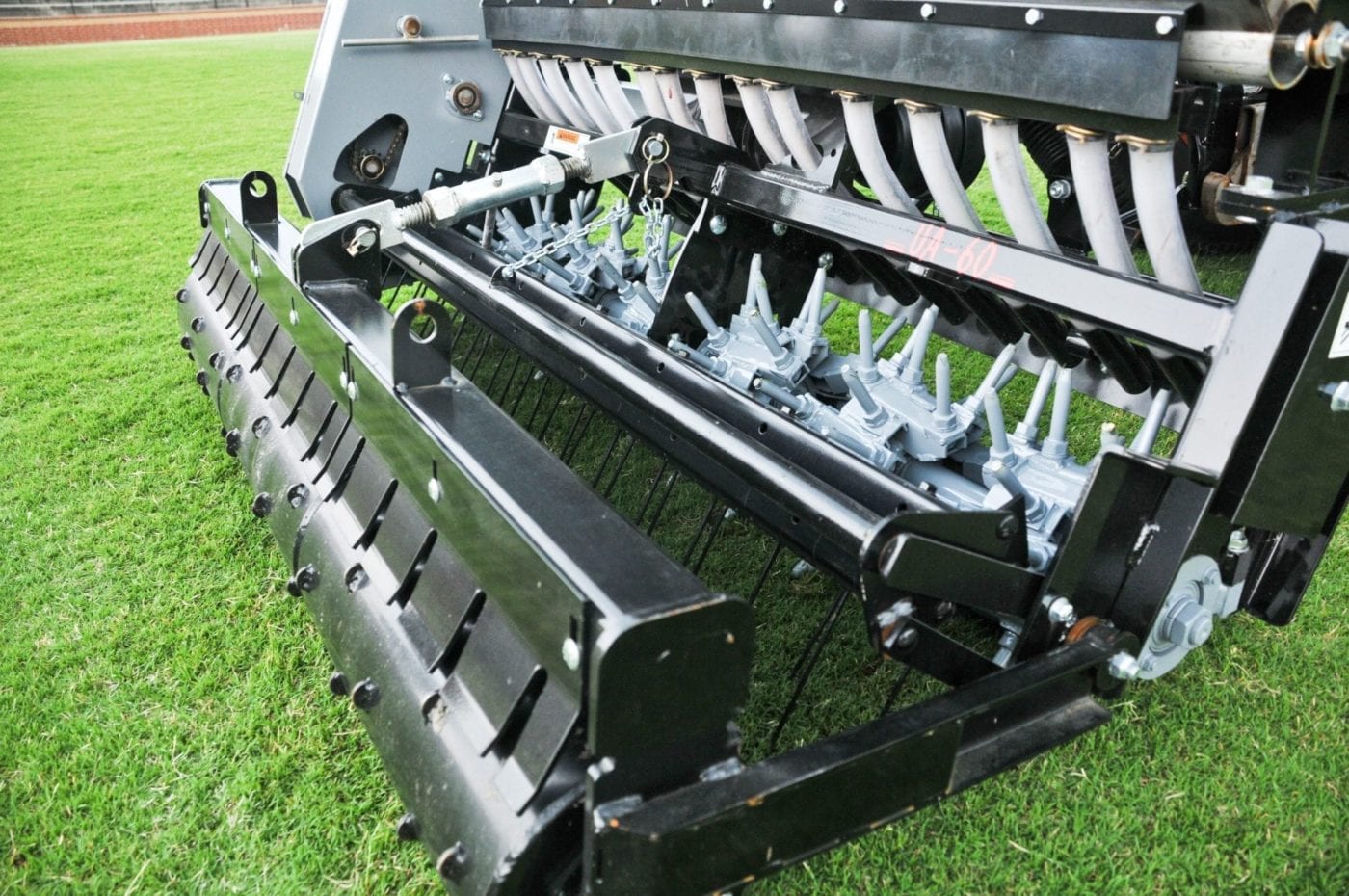
Why Seed Placement Efficiency Matters
When it comes to planting grass seed, placement is everything. A high-quality grass seeder ensures seed is delivered at the proper depth and spacing—eliminating the guesswork that often leads to bare spots, over-seeding, or wasted input. Without control over placement, you’re not just risking thin coverage—you’re losing time, money, and productivity.
This is especially important in areas where uniform emergence matters most, such as pastures, athletic fields, food plots, or commercial turf. Precision seeding minimizes the need for second passes or patch repairs and helps ensure that germination is consistent. As discussed in The Ultimate Guide to Aeration, Seeding & Fertilization Equipment, the right tools used at the right time can significantly improve establishment and minimize cost over the lifecycle of the planting area.
A grass seeder brings efficiency into focus by delivering controlled application every time. Less seed is needed, establishment happens faster, and the quality of your stand is higher from the start.
How a Grass Seeder Improves Time Management
One of the most overlooked ways a grass seeder adds value is by reducing the total number of field passes. Instead of broadcasting and following up with a separate rolling or dragging tool, many seeders integrate soil contact mechanisms that press seed into the soil as you move. This saves time and fuel—and allows a single operator to complete more acreage in less time.
Even more important is what happens after planting. With proper placement and better soil contact, you’re more likely to see strong, even emergence. This limits the need to revisit the field for repairs, overseeding, or troubleshooting. In high-traffic or public-facing spaces like golf courses, sports turf, or municipal grounds, fewer disruptions mean lower labor costs and better service to your end users.
Tools featured in the Turf Wholegoods category offer these kinds of time-saving innovations. Their modular setups and professional-grade reliability make them ideal for pros managing multiple properties or time-sensitive seasonal projects.
Saving Money Through Reduced Inputs and Downtime
Cost control starts with minimizing waste. A grass seeder applies seed more precisely than hand-spreading or broadcasting, reducing the amount of seed required per acre. It also lowers the risk of over-seeding or needing to replant failed areas, which saves not only on seed but on fuel, time, and labor as well.
Fertilizer usage also improves when paired with smart seeding. With proper placement, roots form quickly and nutrient uptake is maximized. This means you get more value out of every pound of fertilizer applied—especially when combined with a soil health plan that includes minimal tillage or aeration.
If you’re trying to determine whether a grass seeder fits into your broader equipment mix, check out No-Till vs. Conventional Drills: Which One Works Best for You?. It explores the difference between drill types and when each approach makes the most sense—information that’s especially valuable if you’re managing multiple zones or crop types.
The Role of Soil Health and Aeration in Maximizing Grass Seeder ROI
Even the best grass seeder won’t perform well on compacted soil. When soil is hard or crusted, seeds struggle to embed, water doesn’t infiltrate evenly, and germination suffers. That’s where mechanical aeration can make all the difference—by opening up the root zone and creating space for both seed and nutrients to reach their destination.
Using a grass seeder after aeration dramatically improves seed-to-soil contact and promotes stronger root development from day one. It also allows your fertilization plan to be more efficient, as nutrients are better retained in porous, well-aerated soil.
This relationship between aeration and seeding success is explored in depth in How Field Aerators Improve Soil Health & Crop Yields. That article details how reducing compaction not only boosts seeding results but also contributes to long-term soil structure and moisture retention—critical for sustainable turf and field management.
Grass Seeders for Pastures, Turf, and Food Plots
Versatility is one of the key strengths of a professional-grade grass seeder. With interchangeable seed boxes, adjustable depth settings, and various tine options, one unit can serve multiple applications—from pasture restoration and cover crop establishment to turf maintenance and wildlife habitat creation.
On smaller plots or in sensitive environments, lighter models offer maneuverability without sacrificing effectiveness. For larger acreage or diverse operations, modular components make it easy to customize a setup that fits your planting strategy and equipment fleet.
Equipment in the Agriculture Wholegoods line reflects this versatility with American-built quality and design features suited for pasture, plot, and large-scale projects. It’s this level of adaptability that allows operators to reduce their overall equipment needs while increasing productivity.
Why a Verticutter Can Boost Grass Seeder Performance
Turf managers understand that even the best grass seeder needs a receptive seedbed. In areas with thick thatch or surface matting, seed can sit on top of the layer instead of penetrating to the soil. This leads to uneven germination and wasted seed—especially in commercial or high-traffic zones.
Verticutters slice through thatch and create shallow grooves in the soil, improving seed-to-soil contact and allowing roots to anchor quickly. This vertical cutting action not only clears the way for seed but also enhances oxygen flow, water absorption, and nutrient movement—all vital to young seedlings.
To understand how these tools complement each other, explore How a Verticutter Improves Turf Quality & Reduces Thatch. It explains the benefits of combining vertical slicing with grass seeding to create an environment where new growth can thrive without competition from existing surface debris.
Getting the Most Out of Your Equipment Investment
Investing in a grass seeder is not just about performance today—it’s about building a more efficient operation for the future. High-quality units pay off quickly through saved labor hours, reduced seed use, and improved stand longevity. That’s especially true when they’re part of a well-supported equipment system.
Durability, serviceability, and modular design are all important considerations. So is support from a trusted manufacturer. 1st Products offers U.S.-built seeders designed with field-tested innovation and backed by decades of experience in turf and agricultural equipment. Whether you’re outfitting a small operation or managing multiple commercial accounts, the value comes from both the performance and the partnership.
Make sure your equipment works as hard as you do—while lasting through more seasons, fewer breakdowns, and smarter maintenance schedules.
Plan Smarter: Where to Go from Here
If you’re ready to cut waste, save time, and see better results from your seeding operations, a grass seeder is a practical, high-impact investment. When integrated with tools like verticutters and aerators, the system becomes even more powerful—allowing you to manage your soil, seed, and fertilizer with precision.
For help identifying the right model or system setup for your land, reach out via the Contact Us page. The experts at 1st Products are ready to help you evaluate your needs and guide you toward the most effective, reliable equipment solution.