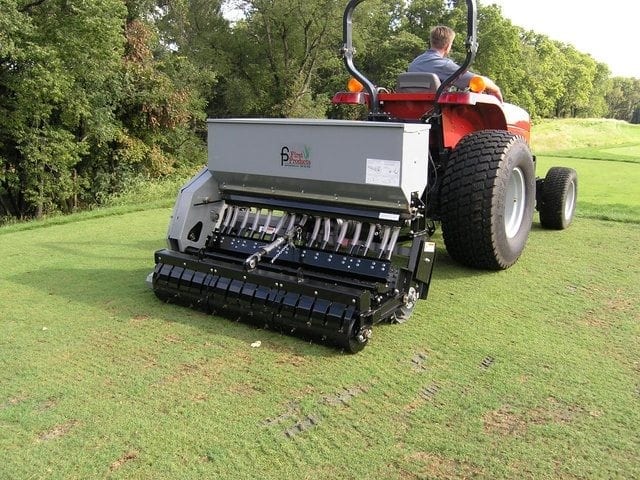
Traditional core aeration leaves a mess. Soil plugs scatter across the surface, fields look rough for days, and someone has to clean it all up before normal use resumes. The AERA-vator solves this problem by using no-core aeration technology that fractures compacted soil without pulling anything to the surface. Fields stay smooth, cleanup disappears, and turf managers regain operational control.
This isn’t a compromise between effectiveness and convenience. No core aeration with vibrating tines delivers the same compaction relief and infiltration improvements that core methods provide, but without the downtime or labor overhead. Understanding how the AERA-vator accomplishes this requires looking at both the engineering and the practical results across different turf applications.
The Engineering Behind No Core Aeration
The AERA-vator uses solid, vibrating tines instead of hollow cores to treat compacted soil. As the machine moves across the turf, these tines penetrate up to 4 inches into the soil profile while vibrating at more than 800 cycles per minute. This rapid oscillation fractures compacted layers rather than extracting them.
The fracturing creates pathways through dense soil without displacing material to the surface. Water and air move through these fracture zones just as effectively as through core holes, reaching the root zone where grass needs them most. Relieving compaction in the top 4 to 6 inches of soil provides the most significant benefits for turf health.
Tine spacing and vibration frequency work together to ensure adequate coverage. The AERA-vator creates approximately 8 holes per square foot, providing density comparable to traditional core aerators. The difference is that these holes don’t leave visible disruption on the surface, allowing immediate return to normal field use.
The drive system maintains consistent depth and vibration regardless of soil conditions. Whether working in slightly moist or moderately dry soil, the machine delivers uniform treatment across the entire area. This consistency ensures reliable results without the variability that wet or dry conditions can create for core aerators.
Why Turf Managers Choose No Core Aeration
The operational advantages start the moment the machine finishes. There’s no cleanup crew needed, no waiting for cores to break down, and no scheduling conflicts between treatment and use. Sports fields can be aerated on Tuesday and host games on Wednesday. Golf courses can treat fairways without closing holes. The flexibility changes how aeration fits into facility schedules.
Labor savings compound quickly. Traditional core aeration often requires three or four crew members when cleanup is included. The AERA-vator typically needs one operator. For operations aerating 40 or 50 acres multiple times per season, the labor difference represents significant cost savings that accumulate year after year.
Turf quality improves because the canopy stays intact. Core aeration disrupts the existing grass cover, creating temporary weak points where weeds can establish. No core aeration fractures the soil while leaving surface vegetation undisturbed. This preservation of turf density matters most during stress periods or on heavily used areas where any disruption can cascade into larger problems.
Member and player satisfaction increases when fields and courses remain playable. Complaints about rough surfaces disappear. Cancellations due to aeration schedules become unnecessary. The facility maintains its reputation for consistent playing conditions while still delivering the soil health benefits that quality turf requires.
Weather flexibility extends the working window. Core aerators struggle in wet conditions because hollow tines plug with saturated soil. They’re also less effective when the soil is too dry to allow adequate penetration. The AERA-vator handles a wider moisture range, allowing work to continue during conditions that would stop traditional equipment. This flexibility helps turf managers stay on schedule despite unpredictable weather patterns common in the Southeast.
Real-World Performance Across Different Applications
Athletic field managers consistently report the biggest operational gains. High school and college complexes that manage multiple fields can aerate everything in a day without disrupting practice or game schedules. The ability to treat fields between weekend events provides maintenance windows that traditional methods can’t match.
One sports complex in North Carolina switched to the AERA-vator after years of coordinating core aeration around game schedules. The facility manager reported that labor hours for aeration dropped by 60 percent, and they eliminated three weeks of reduced field availability that had previously occurred during fall treatment cycles. The turf responded well, with improved drainage and better resistance to compaction throughout the season.
Golf course superintendents use no core aeration for routine maintenance while reserving traditional core methods for annual deep treatments. This hybrid approach provides frequent soil conditioning without the disruption that members notice and complain about. Greens, tees, and fairways receive treatment during the growing season when they need it most, rather than being delayed until convenient downtime appears on the calendar.
Sod farms benefit from the speed and efficiency that no core aeration provides between harvest cycles. After harvesting sod, fields need immediate attention to relieve compaction and prepare for replanting. The AERA-vator treats fields quickly without creating cleanup delays. Some operations report turning fields around 30 percent faster by eliminating the core management phase that traditional aeration requires.
Landscape contractors managing commercial properties appreciate the client-friendly approach. Treating turf at office complexes or municipal parks without leaving visible disruption means fewer questions from property managers and building occupants. The work gets done professionally without creating the temporary eyesore that cores produce.
Integrating No Core Aeration into Your Maintenance Program
Starting with no core aeration doesn’t require abandoning proven practices. Most facilities integrate it gradually, using the AERA-vator for routine treatments while maintaining traditional core aeration for specific situations. This measured approach builds confidence in the method while preserving flexibility.
Frequency recommendations depend on soil type and traffic levels. Clay-heavy soils common in the Southeast benefit from treatment twice per year, typically in spring and fall when turf is actively growing. Athletic fields with heavy use may need additional mid-season treatments to maintain soil structure through peak play periods. Sandy soils require less frequent attention but still benefit from periodic fracturing to maintain optimal infiltration.
Timing aligns with normal turf care schedules. For cool-season grasses, fall treatment prepares the turf for winter and spring growth. Warm-season varieties respond well to late spring or early summer aeration that supports peak growth periods. The lack of cleanup requirements means scheduling can prioritize turf needs rather than working around operational constraints.
Combining no core aeration with other practices amplifies results. Overseeding immediately after treatment takes advantage of the fractured soil for excellent seed-to-soil contact. The smooth surface doesn’t interfere with seed distribution, and the openings in the soil provide ideal conditions for germination. Topdressing can follow aeration to improve surface uniformity and incorporate organic matter into the fracture zones.
Equipment setup requires minimal training. Operators learn to adjust depth based on soil moisture and compaction severity, recognize adequate coverage patterns, and maintain appropriate ground speed for effective treatment. Most crews become proficient within a few hours of hands-on work. The straightforward operation means staff turnover doesn’t create knowledge gaps that compromise results.
The Numbers Behind No Core Aeration
Cost comparisons between traditional and no-core methods reveal significant differences when all factors are included. A 40-acre athletic complex spending $2,500 on core aeration equipment rental plus $1,800 in cleanup labor twice per year faces annual costs of around $8,600. That same facility using the AERA-vator eliminates cleanup labor entirely, reducing recurring costs to equipment operation and one operator’s time.
Equipment investment for the AERA-vator varies by model and capacity. The return on investment calculation should include labor savings, schedule flexibility value, and turf quality improvements. For facilities with substantial aeration needs, payback periods of two to three years are common. The equipment’s durability and low maintenance requirements extend its useful life well beyond the payback window.
Maintenance costs run lower than for core aerators. Solid tines don’t require the frequent cleaning and replacement that hollow tines need. Drive components and bearings follow standard service intervals, and most operations report minimal unscheduled downtime. This reliability keeps the equipment productive and prevents delays during critical treatment windows.
Operational efficiency shows up in multiple ways. Single-operator requirements reduce labor costs. Faster field turnaround eliminates revenue loss from cancelled events or member complaints. Improved turf quality reduces other inputs like irrigation and fertilizer by supporting deeper root systems and better nutrient cycling. These combined benefits often exceed the direct cost savings from eliminating cleanup.
The versatility of the AERA-vator platform adds value beyond basic aeration. The machine handles multiple soil conditioning tasks, from seedbed preparation to surface smoothing. This multipurpose capability reduces the total equipment fleet required and maximizes the utilization of each machine. For details on how the wider AGRI-vator model serves similar purposes for larger acreage, see our article on sod regrowth acceleration.
Making the Transition to No Core Aeration
Facilities considering the switch often start with a demonstration on their own turf. Seeing the AERA-vator work under actual site conditions removes much of the uncertainty from the decision. 1st Products provides field demonstrations that let managers evaluate performance, observe the lack of surface disruption, and verify compatibility with existing equipment and procedures.
Questions about effectiveness compared to core aeration are natural. The answer lies in understanding that both methods achieve the same goal through different mechanics. Core aeration removes soil to create openings. No core aeration fractures soil to create pathways. Both relieve compaction, improve infiltration, and support healthier turf. The operational differences matter more than the technical approach for most facilities.
Seasonal planning helps optimize results. Facilities new to no core aeration often schedule their first treatments during moderate weather when turf is actively growing. This timing provides the best opportunity to observe benefits and build confidence in the approach. Once results confirm expectations, incorporating no core aeration into regular maintenance becomes straightforward.
Staff buy-in develops quickly when crews see the operational improvements firsthand. Eliminating cleanup work is popular with field staff. Reduced complaints from coaches, players, or members makes everyone’s job easier. The straightforward operation and minimal maintenance requirements mean the equipment doesn’t create new problems while solving old ones.
Long-term programs benefit from the consistency that no core aeration provides. Regular treatment prevents severe compaction from developing rather than addressing problems after they’ve impaired turf performance. This proactive approach maintains soil structure year-round, supporting better growth, stronger root systems, and more resilient turf that handles stress and traffic more effectively.
See the AERA-vator in action on your fields. Contact 1st Products to schedule a demonstration or connect with a local dealer to discuss equipment options. No core aeration technology delivers the results your turf needs without the cleanup your schedule can’t afford.