Why Sod Cleanup Deserves a Closer Look
Sod cleanup is one of the most underestimated expenses in turf and sod farming operations. Many managers focus on the efficiency of harvest and planting, but overlook what happens between those phases. The result is hidden costs that quietly erode profit margins every season. These costs include labor hours lost to manual cleanup, fuel consumption, disposal fees, equipment wear, and the time value of delayed field turnover. Together, they form a silent drain on revenue and productivity.
This article examines every layer of sod cleanup costs, including the effects of inefficient processes, weather delays, and soil degradation. It highlights how traditional cleanup methods, often involving multiple passes with general-purpose equipment, lead to compaction, reduced yields, and higher input costs in subsequent cycles.
Using factual data from industry sources and field operations, the analysis demonstrates how modern sod farming equipment, such as the 1st Products Sod Scrap Harvester, can convert cleanup from a loss center into a profitable, single-pass process. You’ll learn how to quantify the true cost of inefficient cleanup, calculate your return on investment for equipment upgrades, and build more resilient operations that maintain consistent profitability regardless of weather or labor conditions.
Every acre of sod carries an unseen cost after harvest. Understanding and addressing that cost is essential to increasing production capacity, extending equipment life, and safeguarding long-term profitability.
A Hidden Cost That Drains Profit from Every Sod Field
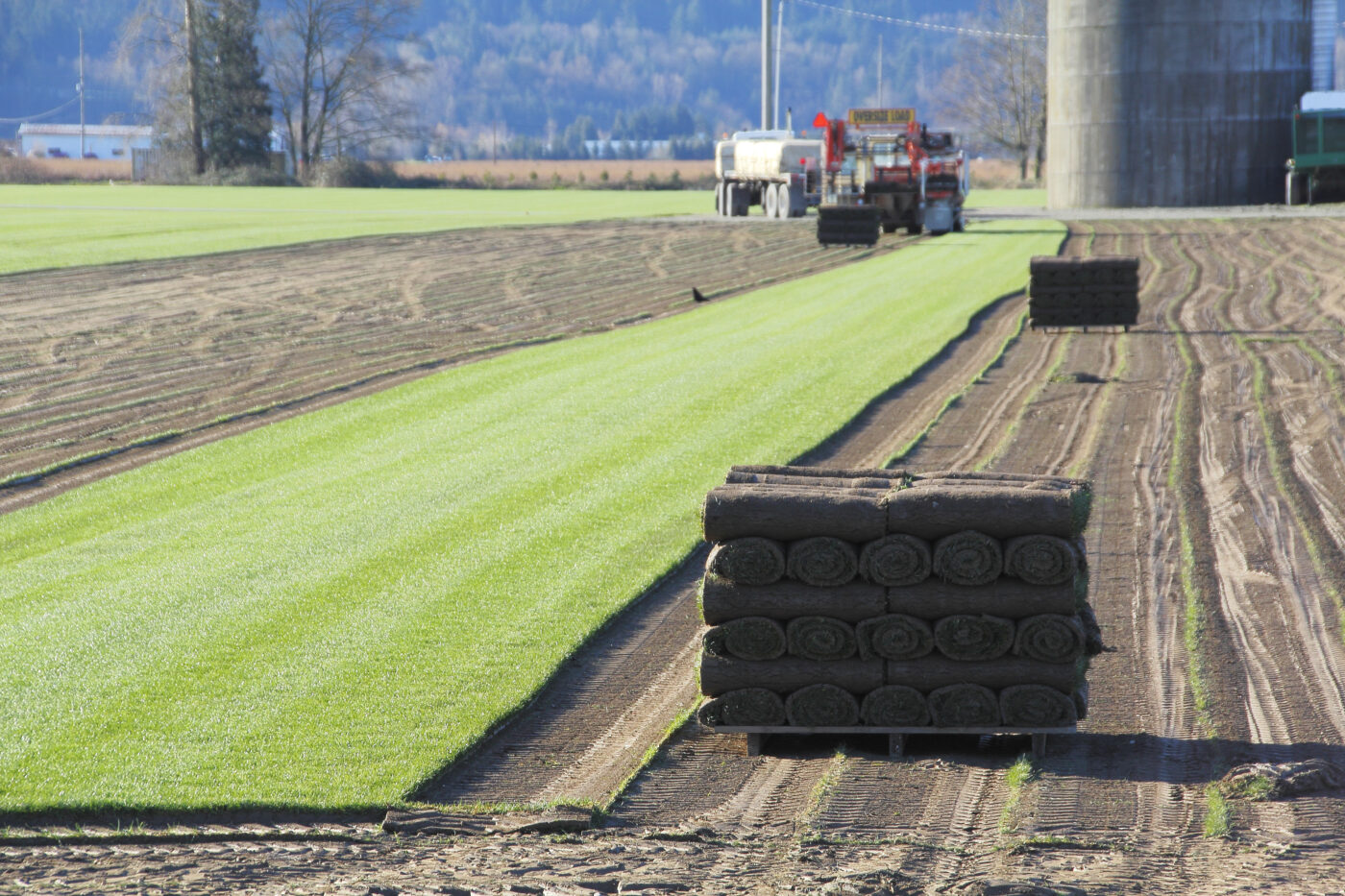
It’s early morning on a freshly harvested sod field. The loaders are gone, the trucks have left, and what remains looks like a patchwork of half-torn turf, compacted soil, and debris piles. You glance at the schedule and realize your crew is already two days behind. The machines that should be preparing the next planting sit idle, and your costs are climbing by the hour.
This is where sod cleanup costs start to spiral. The expense goes far beyond what you see in payroll or diesel receipts. Cleanup inefficiency is the hidden tax on sod production, an accumulation of wasted labor, fuel, and opportunity that quietly cuts into every acre’s profitability.
Many farm operators accept these costs as unavoidable. Crews work overtime to remove leftover sod and level the ground. Machines run longer than expected, wearing down components designed for gentler workloads. Every delay in field turnaround means lost production days, and those delays add up to thousands of dollars in lost potential revenue across a season.
Traditional cleanup processes rely on outdated, multi-pass methods that require repeated handling of the same material. The problem compounds under less-than-ideal weather conditions, where heavy equipment compresses the soil, creating future yield issues. Even if a field looks clean, it may be losing value due to degraded soil structure and reduced water retention capacity.
Modern sod farming equipment addresses these inefficiencies through single-pass systems that collect debris, level the soil, and prepare fields for replanting in a single operation. Purpose-built machinery, such as the 1st Products Sod Scrap Harvester, eliminates redundant labor, reduces fuel use, and preserves topsoil integrity.
For most sod operations, cleanup represents one of the largest controllable expenses. Understanding what drives these costs and how to eliminate them through better equipment and process efficiency is the first step toward higher productivity and profitability.
The Real Cost of Traditional Sod Cleanup
The financial burden of sod cleanup extends far beyond what most operators expect. While many track fuel and labor costs, the real expense lies in lost productivity, equipment wear, and extended turnaround times between harvest and replanting.
Labor Costs
According to the U.S. Bureau of Labor Statistics (BLS), the mean hourly wage for Crop, Nursery, and Greenhouse Farmworkers and Laborers was $17.37 as of May 2023. For Agricultural Equipment Operators, the mean hourly wage was $22.63 (BLS OES 45-2091).
Even using these conservative averages, a three-person cleanup crew working an eight-hour day costs between $417 and $543 per day in wages alone, before adding fuel, equipment maintenance, or overhead.
The USDA Economic Research Service (ERS) reports that the national average hourly wage for nonsupervisory farmworkers rose to $17.55 in 2023, reflecting a 4 percent increase over the previous year. This steady rise in wage rates means that inefficient cleanup processes directly translate to higher recurring expenses every season.
Fuel and Equipment Operation
Diesel fuel remains one of the most volatile cost factors. The U.S. Energy Information Administration (EIA) lists the average on-farm diesel price in 2023 at roughly $4.12 per gallon (EIA, Diesel Fuel Update).
Maintenance and Wear
Cleanup is one of the toughest jobs on field equipment. Tractors, loaders, and attachments experience high torque, vibration, and exposure to abrasive debris. Over time, this leads to faster wear on tires, bearings, hydraulic components, and cutting edges. While maintenance is a normal part of farm operations, excessive cleanup hours accelerate those costs and can shorten the lifespan of high-value machines. Consistent inspection and preventive maintenance help mitigate some of this impact, but the most effective solution is to reduce unnecessary field passes.
Disposal and Handling
Removing or managing leftover sod material adds another layer of expense. Some operations compost debris on-site, while others must transport it to approved disposal areas. Both approaches require fuel, labor, and time. Although each load may seem minor, these tasks accumulate across multiple harvests and can reduce available work hours for production-related tasks.
Operational Inefficiency
Every day a field remains idle between harvest and replanting represents lost revenue potential. The longer the cleanup takes, the fewer planting windows remain in a growing season. Using modern sod farming equipment that can perform several cleanup functions in one pass helps shorten downtime and control these hidden costs.
Tools such as the AGRI-vator are designed to loosen soil and improve aeration while minimizing surface disturbance. By integrating cleanup, soil conditioning, and preparation in a single operation, farms can reclaim valuable time and extend the productive life of their equipment.
How Weather Delays Multiply Cleanup Expenses Exponentially
Weather can turn a straightforward cleanup schedule into a logistical setback. When fields remain wet after rainfall, even a short delay can ripple through the entire production cycle. Heavy machinery operating on soft ground not only moves more slowly but also risks damaging soil structure and creating ruts that require extra work later.
Saturated soil offers little resistance to the weight of equipment. Repeated passes in these conditions can compact the surface and reduce its ability to drain properly. That means future rain takes longer to infiltrate, and fields stay wetter between operations. Over time, this slows planting, disrupts nutrient uptake, and increases the need for corrective aeration.
Cleanup delays are costly not just because of fuel or labor hours but because of the opportunity they take away. Every additional day spent waiting for fields to dry is a day lost to planting, seeding, or maintenance elsewhere on the farm. When cleanup stretches out, the next stage of production must compress to stay on schedule.
Operating in poor weather also adds physical wear to machines. Muddy or saturated fields force tires and moving parts to work harder, accelerating fatigue on components that already operate under high load. In some cases, even light slips or recoveries can stress drivetrains and hydraulic systems beyond normal limits.
Planning fieldwork around weather windows is part of every operation, but efficient equipment helps minimize exposure to delays. Tools that disturb the soil gently and maintain traction in damp conditions make cleanup safer and more consistent.
Efficient cleanup is not about outrunning the weather; it is about being prepared when it changes. Choosing implements that balance power with soil protection allows work to continue responsibly while maintaining field integrity for future planting.
The Double-Pass Trap That Destroys Your Efficiency
A single cleanup pass should prepare a field for the next stage of production. Yet, many sod operations still rely on methods that require multiple passes to remove debris, level soil, and prepare the surface for planting. Each return trip over the same ground increases sod cleanup costs through added labor, fuel use, and equipment wear.
Repeated passes also strain soil structure. When heavy machinery repeatedly crosses the same field, its weight compresses the upper soil layer and restricts air movement through the root zone. Once compacted, water takes longer to soak in, and the field dries more slowly after rainfall. This not only adds time to the next cleanup cycle but also drives up sod cleanup costs season after season.
Cleanup inefficiency has another hidden cost: reduced scheduling flexibility. When crews and equipment are tied up completing a task that could have been finished in one pass, other jobs fall behind. The cumulative result is more overtime, more fuel hours, and tighter windows for planting or mowing.
Efficient cleanup is not about working faster; it is about working smarter. Reducing repeated passes turns cleanup from a maintenance chore into an investment in long-term field performance.
Soil Degradation Costs That Don’t Show Up Until Next Season
Healthy soil is the foundation of every productive sod field. When cleanup methods disturb the surface excessively, the foundation weakens, and sod cleanup costs gradually rise. Overworked soil loses structure, holds less moisture, and becomes more susceptible to erosion during heavy rain.
Compaction and scraping remove the small air pockets and organic material that help soil store water and nutrients. When that structure collapses, irrigation and fertilizer become less effective, requiring higher inputs to achieve the same results. Fields that drain poorly after cleanup also stay wet longer, delaying subsequent planting or harvesting operations.
The effects of soil degradation rarely appear immediately. Yield declines and uneven growth patterns often emerge months later when root systems encounter hardened layers that restrict their spread. Correcting these conditions typically requires deep aeration or the addition of soil amendments, both of which increase overall sod cleanup costs in future cycles.
Preserving soil structure during cleanup is the most reliable way to avoid these cascading costs. Equipment that lifts and loosens the surface rather than scraping it flat helps maintain porosity and oxygen exchange. Implements like the AGRI-vator are designed for this purpose. They prepare the field for reseeding or regrowth while limiting disturbance to the deeper layers that support long-term turf health.
| Every additional pass increases both visible and hidden expenses. The visible cost is labor and fuel. The hidden cost is the gradual loss of soil quality that makes every future pass less productive. Minimizing disruption during cleanup preserves the field’s structure, improves water management, and reduces total sod cleanup costs over time. |
Equipment Wear Accelerates When Cleanup Methods Are Inefficient
Every operator knows that time in the shop costs more than time in the field. Cleanup work is demanding on machinery because it combines slow travel, high torque, and continuous exposure to abrasive soil and plant residue. These conditions increase wear on bearings, tires, and hydraulic systems, especially when fields require multiple passes.
Each hour of unnecessary operation raises maintenance demands and shortens service intervals. When those hours accumulate across a season, sod cleanup costs extend beyond labor and fuel; they begin to erode equipment value. The longer a machine spends pulling debris or smoothing ground, the faster its resale and operating efficiency decline.
Regular inspection helps prevent unexpected failures, but the most effective way to reduce mechanical stress is to minimize redundant work. Cleanup systems that finish the job in one controlled pass protect both the field and the equipment. This is where sod farming equipment designed for durability and multipurpose use can make a measurable difference.
Implementing single-pass cleanup practices reduces wear cycles, simplifies maintenance scheduling, and helps keep operating costs predictable. Over time, this approach saves more than just repair expenses; it protects uptime, reliability, and the ability to stay on schedule when conditions tighten.
The Labor Productivity Gap You’re Probably Ignoring
Crew efficiency directly determines production output. When cleanup requires multiple workers and repeated passes, the available workforce spends more hours per acre without increasing yield. These inefficiencies compound during peak season when labor is most limited.
The true challenge is not the cost of labor itself but how that labor is allocated. Workers engaged in repetitive cleanup tasks are not available for higher-value operations such as planting, fertilizing, or harvest preparation. Each hour spent retracing the same field adds to overall sod cleanup costs while narrowing profit margins.
Efficient equipment use shifts that balance. Machines that handle debris collection, soil leveling, and aeration in a single pass allow smaller crews to accomplish more per day. This raises productivity without increasing payroll or overtime.
When employees see consistent results with less physical strain, retention improves. A more efficient cleanup workflow enhances both morale and safety, reducing fatigue and minimizing the likelihood of accidents or rushed work. In an industry where timing and precision drive profit, this productivity improvement becomes a long-term advantage.
Modern Sod Farming Equipment Changes the Economics Completely
Innovation in sod farming equipment has reshaped how growers handle post-harvest cleanup. Modern implements are engineered to combine multiple field operations, scrap removal, leveling, and soil preparation into one efficient process. This integration reduces total fuel use, conserves labor, and lowers mechanical wear.
The Sod Scrap Harvester from 1st Products exemplifies this approach. Designed to collect and manage leftover sod efficiently, it allows operators to complete cleanup more quickly while leaving the soil smooth and ready for the next planting. Removing waste and preparing the seedbed simultaneously helps reduce total sod cleanup costs without compromising soil quality.
These specialized machines are more than convenience tools; they’re productivity multipliers. Each design element, from adjustable depth controls to precision blade geometry, reflects a focus on improving efficiency and protecting soil health. Equipment that completes multiple tasks simultaneously reduces passes, decreases compaction, and allows quicker field turnaround, all key factors in maintaining profitability across growing cycles.
The long-term value of these improvements extends beyond immediate cleanup savings. When fields are returned to production faster and equipment lasts longer, farms capture additional revenue opportunities throughout the year.
| Reducing sod cleanup costs removes waste. Every extra pass, unnecessary repair, or idle hour costs more than it appears. Purpose-built equipment that completes multiple cleanup steps in one operation preserves both the machinery and the schedule, ensuring consistent results season after season. |
Calculating the True ROI of Upgrading Your Cleanup Process
Evaluating the return on investment for new sod farming equipment begins with a clear understanding of where inefficiencies exist. Many operations consider only the purchase price of machinery while overlooking how much they already spend on excess labor, fuel, and downtime. A complete assessment reveals that reducing unnecessary cleanup work often yields the fastest path to profitability.
The most direct savings come from lower operating hours. Fewer passes mean fewer labor hours, less fuel consumption, and reduced equipment wear. When each of these areas improves, sod cleanup costs begin to decline immediately. Over time, the compounded effect of operational savings can offset the cost of the equipment and generate ongoing returns.
Beyond direct expenses, the largest advantage comes from field efficiency. Faster cleanup shortens the time between harvest and replanting, allowing more productive cycles per year. Increasing field availability directly enhances revenue potential without expanding acreage. These gains represent the true return on investment, turning time into capacity.
Quality improvements also play a role. Effective cleanup reduces soil compaction, limits damage to field structure, and creates a more consistent seedbed. When soil health is maintained, fertilizer use becomes more efficient, and turf uniformity improves. Each of these benefits supports long-term profitability while protecting your investment in land and equipment.
The real measure of ROI is not found in a spreadsheet; it’s seen in sustained performance. Lower repair needs, fewer delays, and steady field turnover contribute to predictable cash flow and stronger financial resilience. Upgrading cleanup systems transforms a recurring expense into a managed process, keeping sod cleanup costs low while building value into every acre you produce.
Weather Resilience Creates Competitive Advantages
Operations that maintain productivity despite unpredictable weather gain a clear competitive edge. While others lose time waiting for ideal conditions, weather-resilient producers keep working, fulfill commitments on schedule, and capture opportunities their competitors miss. This adaptability directly influences profitability and helps keep sod cleanup costs under control throughout the season.
Modern sod farming equipment is designed to perform effectively across a wider range of conditions than traditional methods. Purpose-built collection systems handle wet or dry material with consistent results, and adjustable depth settings accommodate varying debris densities and soil types. Even in challenging conditions, this equipment performs efficiently enough to prevent the costly downtime that inflates sod cleanup costs for less prepared operations.
Reliable scheduling becomes a true competitive differentiator. Customers value suppliers who can deliver consistently, regardless of weather disruptions. Operations that complete cleanup and turnaround quickly build reputations for dependability that support premium pricing and long-term partnerships. When you can confidently promise delivery dates, you become the trusted choice for high-value clients.
Weather resilience also strengthens overall risk management. A short rain delay no longer disrupts your entire schedule if cleanup can be completed in one working day instead of several. This flexibility reduces operational pressure, improves resource planning, and allows more strategic timing for planting and harvesting.
Equipment such as the Sod Scrap Harvester gives producers a practical advantage by maintaining performance across variable field conditions. The ability to work efficiently between storms or during limited dry windows protects both yield and soil integrity. This kind of operational stability is the foundation of sustainable, long-term success.
Hidden Costs in Outsourced Cleanup Services
Some operations try to control sod cleanup costs by outsourcing the work to external contractors. While this can seem convenient, it often introduces hidden expenses and operational risks that outweigh the benefits. Outsourcing transfers the workload, but not the responsibility for results.
Contractor pricing typically includes markups for labor, equipment use, insurance, and administrative overhead. These markups reflect the contractor’s cost of doing business rather than your operational efficiency. The outcome is often higher per-hour expenses without the flexibility to adjust workflow or prioritize your own production schedule. Over time, this can make outsourced cleanup more expensive than managing the process internally with modern sod farming equipment.
Scheduling also becomes a vulnerability. Contractors manage multiple clients and balance their priorities across several projects. During peak seasons, limited availability can delay cleanup for days, creating downtime that directly affects planting and harvesting timelines. Missed windows for field preparation drive up sod cleanup costs indirectly by reducing productivity and extending turnaround times.
Quality control is another concern. When a third party performs cleanup, you lose visibility into daily decision-making. Contractors under time pressure may take shortcuts that harm soil quality, such as removing too much topsoil, leaving debris behind, or compacting the surface with repeated passes. The resulting field conditions can require remediation work that eliminates any perceived savings.
Long-term reliance on outside services also limits operational growth. Teams that depend on external contractors never develop the internal skill sets or equipment knowledge needed to operate efficiently. Instead of building capacity and equity in durable machinery, the operation stays locked into recurring external costs. Investing in in-house capabilities, supported by tools such as the Sod Scrap Harvester, creates a self-sustaining system that strengthens control, reduces recurring expenses, and improves long-term profitability.
Equipment Versatility Extends Value Beyond Cleanup
The most valuable equipment investments are those that serve multiple purposes throughout the year. Modern sod farming equipment designed for cleanup can also contribute to soil preparation, field leveling, and even planting operations. This extended functionality helps manage sod cleanup costs more effectively by increasing machine utilization and reducing idle time.
Cleanup tools that support seedbed finishing or soil conditioning turn post-harvest work into preparation for the next cycle. The same machinery that collects debris after harvest can smooth the surface, incorporate amendments, and ready the soil for seeding. When equipment performs several of these tasks efficiently, each acre becomes more productive, and long-term operational savings grow naturally.
Modular design is the key to this flexibility. Interchangeable attachments, adjustable depth settings, and universal mounting systems allow one core implement to handle multiple roles. Instead of investing in several specialized machines, operators can adapt a single unit to manage different field conditions and crop cycles. This adaptability keeps sod cleanup costs contained while improving overall return on investment.
Crew training and maintenance also become more efficient when using a smaller, standardized equipment fleet. Operators gain confidence and precision with familiar machinery, reducing errors and downtime. Fewer equipment types mean simpler parts management, streamlined servicing, and lower long-term maintenance costs. Together, these efficiencies compound into measurable operational gains that support consistent performance across every season.
Making the Transition to Efficient Cleanup Operations
Understanding the impact of inefficient cleanup only matters if it leads to improvement. Transitioning from outdated methods to modern systems requires planning, but when done systematically, the process is manageable and yields measurable long-term benefits.
Start by establishing an accurate baseline. Document your current sod cleanup costs across multiple fields, including labor hours, fuel use, equipment wear, and the time between harvest completion and replanting readiness. This data becomes your foundation for measuring improvement and calculating the true return on investment once new equipment is in place.
Next, evaluate equipment based on your specific operational needs. Consider field size, soil type, debris volume, and available tractor power before making a purchase. Partner with dealers who specialize in sod farming equipment rather than general agricultural machinery. Their experience ensures recommendations that align with your workflow. Demonstration opportunities or field trials can also provide valuable insight into real-world performance.
Plan your transition during slower periods of the season. Implementing new processes when schedule pressure is low allows for thorough training and fine-tuning. Begin with a single field or test plot to build operator confidence before applying new systems across the full operation. This measured approach reduces risk while accelerating team proficiency.
Budget holistically for the transition. Quality equipment represents a meaningful investment but also delivers lasting savings. Financing programs, dealer incentives, and equipment tax advantages can make the upgrade more accessible. Consider how reduced labor hours, lower maintenance needs, and shorter turnaround times will offset sod cleanup costs across future seasons.
Finally, choose manufacturers and dealers that provide long-term support. Proven American-made equipment from companies such as 1st Products offers the reliability of durable engineering, consistent parts availability, and expert technical service. Strong dealer partnerships ensure that your operation receives ongoing training and guidance, critical elements for maintaining efficiency and protecting your investment.
Long-Term Success Requires Operational Excellence
Efficient cleanup is one of the most powerful levers for profitability in sod farming. When cleanup is fast, thorough, and cost-effective, the rest of the operation improves. Fields rotate faster. Soil health stabilizes. Labor productivity rises. Equipment lasts longer. Schedule reliability increases, and profitability grows naturally as sod cleanup costs decline.
The operations that thrive in the long term are those that continually identify inefficiencies and act on them. Cleanup might not seem like the most visible place to start, but the financial impact of improvement is immediate and measurable. Every hour saved and every dollar retained from efficient cleanup supports higher production, better equipment utilization, and stronger financial resilience.
Modern sod farming equipment was developed specifically to address these challenges. The technology is proven, and the operational savings are well documented by farmers who have made the transition. Each efficiency upgrade protects margins and allows your business to reinvest in growth rather than losing ground to maintenance and delays.
Frequently Asked Questions
1. What are the main factors that drive up sod cleanup costs?
The biggest contributors include excessive labor hours, fuel use from repeated field passes, and increased equipment wear. Poor timing after rainfall can also lead to soil compaction, resulting in longer recovery periods and additional aeration requirements. Addressing these inefficiencies with purpose-built sod farming equipment is the most effective way to control costs.
2. How can modern sod farming equipment reduce cleanup expenses?
Modern equipment integrates multiple cleanup steps—such as debris collection, leveling, and soil preparation—into a single pass. This reduces fuel use, shortens labor hours, and limits mechanical wear. It also helps protect soil structure, preventing future costs associated with compaction or uneven surfaces.
3. What is the return on investment for upgrading the cleanup equipment?
The return depends on field size, soil conditions, and operating hours, but most operators see measurable savings in labor and fuel within the first season. The key ROI benefit comes from increased efficiency and reduced downtime. When fields rotate faster, overall production capacity and revenue potential grow.
4. Why is soil health so important in controlling long-term costs?
Healthy soil improves drainage, nutrient retention, and root development, reducing the need for fertilizers and corrective treatments. Compacted or overworked soil, on the other hand, slows water absorption and plant growth, extending cleanup and replanting timelines. Protecting soil health is one of the most cost-effective ways to lower sod cleanup costs over time.
5. How does weather impact cleanup efficiency and cost control?
Unpredictable weather increases downtime for operations that rely on traditional equipment. Modern implements handle a wider range of field conditions—wet or dry—so work can continue safely when others are idle. This flexibility stabilizes scheduling and helps prevent backlogs that increase expenses.
6. What are the hidden costs of outsourcing cleanup services?
Outsourcing can seem convenient, but it often leads to higher total costs. Contractors prioritize their own schedules, which can delay your field turnaround. They may also use equipment unsuited to sod-specific conditions, resulting in soil damage or incomplete debris removal. Building in-house capabilities with sod farming equipment gives you control over cost, timing, and quality.
7. How can operations track and manage sod cleanup costs effectively?
Start by documenting all inputs—labor hours, fuel consumption, and maintenance—over several cleanup cycles. Use this data as a benchmark to measure improvements after implementing new systems. Many operations discover that consistent tracking reveals hidden inefficiencies and supports more accurate ROI calculations.
8. What should I look for when choosing cleanup equipment?
Evaluate based on field size, soil type, debris volume, and available horsepower. Prioritize implementing solutions that combine multiple cleanup steps into a single pass and minimize soil disruption. Reliable manufacturer support, available parts, and proven engineering are essential for long-term performance. American-made equipment from 1st Products offers all these benefits, backed by dealer service.
9. How can I see modern cleanup equipment in action before investing?
1st Products offers live demonstrations where you can see the Sod Scrap Harvester and AGRI-vator working under real field conditions. Observing performance firsthand helps confirm fit, efficiency, and ease of use before making a purchase decision.
Take Control of Your Cleanup Costs Today
The expenses many farms accept as unavoidable are not fixed; they’re the byproduct of outdated tools and inefficient methods. Traditional cleanup systems designed for general agricultural use often fail to meet the specific demands of sod production. Purpose-built equipment eliminates wasted motion and reduces sod cleanup costs by combining multiple field tasks into a single streamlined process.
Begin by quantifying what inefficiency is costing your operation. Account for labor, fuel, equipment wear, soil degradation, and revenue lost from delayed field turnover. When compared with the investment in modern cleanup equipment, the advantages become clear. The right tools generate immediate savings and long-term value.
1st Products has dedicated decades to engineering equipment that meets the unique challenges of sod and turf operations. Tools such as the Sod Scrap Harvester deliver single-pass efficiency, soil protection, and consistent performance under demanding conditions. Modular designs, American-made craftsmanship, and dealer-supported service ensure that each product provides years of reliable use.
Stop accepting sod cleanup costs that drain your profitability season after season. Contact 1st Products or a local dealer to discuss your needs and explore equipment options. Request a demonstration to see how modern machinery can improve your workflow and protect your bottom line. Speak with producers who have already transitioned and are now operating more efficiently and profitably.
Your competition is making these upgrades. Your customers expect reliability. Your profitability depends on operational efficiency. The technology exists, and the opportunity is available, to take control of your cleanup process today.
Efficient sod cleanup isn’t just about saving money. It’s about building a resilient, productive, and sustainable operation that continues to perform year after year. The right equipment investment pays for itself through improved efficiency, stronger soil health, and increased capacity year-round.
Take control of your cleanup process now; your long-term success depends on it.