One of the most common hesitations turf managers have about aeration is the recovery period. Core aeration in particular leaves a surface covered in plugs and holes that can look rough for weeks, which creates real problems on properties that need to stay presentable and functional. Golf courses, athletic fields, and commercial landscapes often can’t afford to look like they just went through a renovation every time routine maintenance is performed.
This hesitation is understandable, but it leads some turf managers to skip aeration entirely or push it off until conditions deteriorate enough that they have no choice. That approach is costly in the long run. Compaction builds gradually and silently, and by the time the turf shows obvious signs of decline, the problem is significantly harder to correct than it would have been with consistent preventive aeration.
The good news is that modern commercial aeration equipment has evolved to address this tradeoff directly. The right aerator relieves compaction effectively without leaving the turf in a condition that requires extended recovery. This guide explains how that works and what to look for in equipment that delivers both outcomes.
What Compaction Actually Does to Turf
Soil compaction is the reduction of pore space in the soil structure. Healthy soil has a balance of solid particles, water, and air that supports root development and microbial activity. When that pore space gets compressed by repeated traffic, heavy equipment, or rain impact on dry soil, the balance shifts and roots have less access to the air and water they depend on.
The effects show up gradually. Turf thins out in high-traffic areas. Root systems stay shallow because they can’t penetrate the compacted layer. Irrigation becomes less efficient because water runs off or pools instead of infiltrating. Fertilizer applications produce diminishing returns because inputs can’t reach the root zone effectively.
By the time a turf manager can clearly see compaction damage in the surface, the soil has usually been in a degraded state for a full growing season or more. That lag between cause and visible effect is part of why preventive aeration on a consistent schedule outperforms reactive aeration after the turf has already declined.
The Golf Course Superintendents Association of America (GCSAA) recommends aeration at least annually on most managed turf, with more frequent treatment on high-traffic areas. Their guidance consistently emphasizes that the timing and method of aeration matter as much as the frequency.
Why Traditional Core Aeration Creates Surface Damage
Core aeration removes cylindrical plugs of soil from the turf, leaving holes in the surface and depositing the extracted material as plugs on top. This is effective at relieving compaction and has been a standard practice for decades, but it comes with real surface impact that not every property can accommodate.
The holes left behind take time to fill in naturally, and the plugs on the surface need to break down or be removed before the field looks and plays normally again. On a golf green or a natural grass stadium surface, that recovery window is a significant operational constraint. It requires either closing the surface temporarily or accepting degraded playing conditions while recovery happens.
For properties with heavy use schedules and limited maintenance windows, core aeration creates a scheduling problem that sometimes leads managers to delay or skip treatments they know their turf needs.
How Vibrating Tine Aeration Works Differently
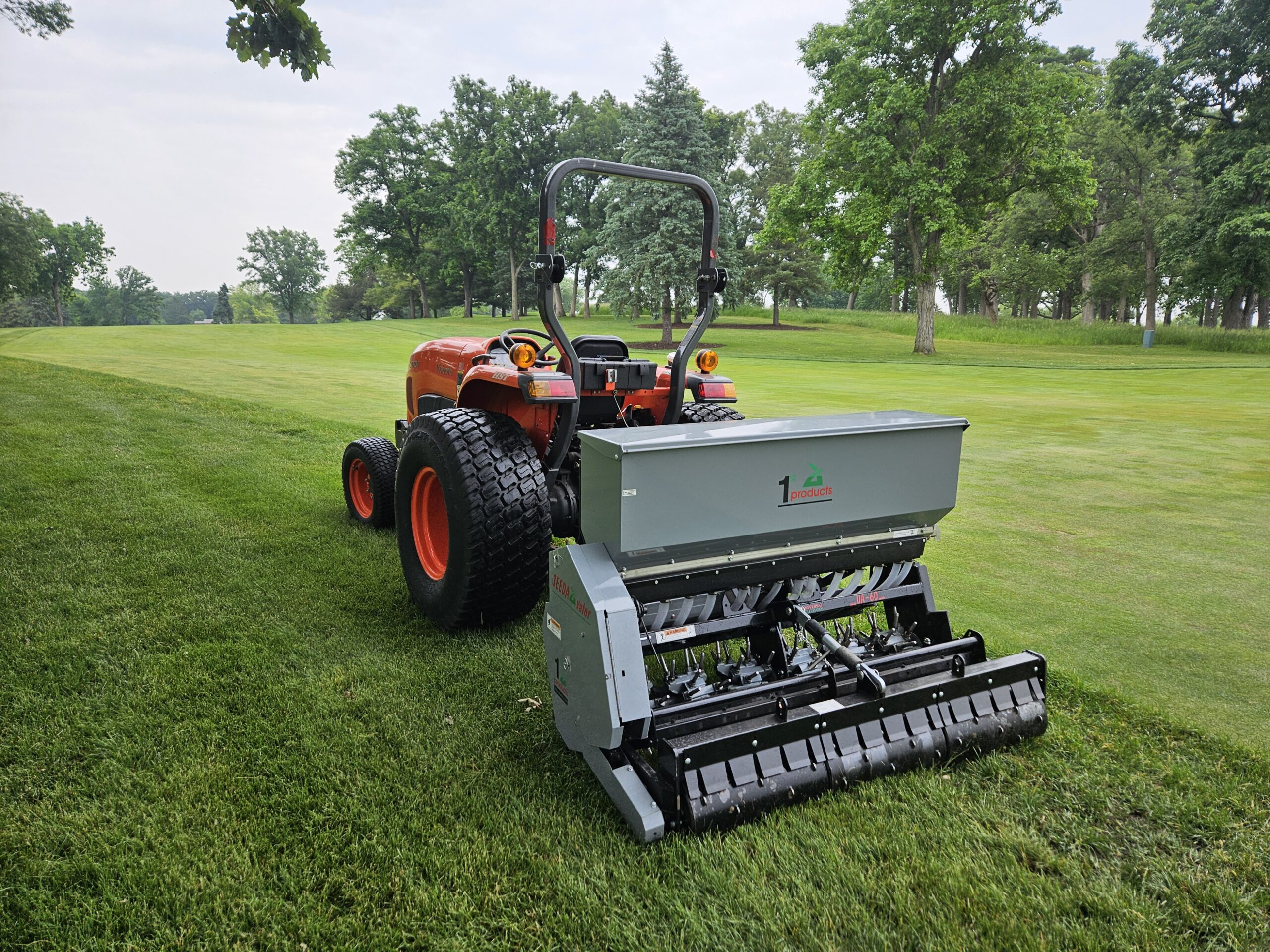
Vibrating tine aerators take a different mechanical approach to the same underlying problem. Instead of removing soil cores, they use tines that vibrate rapidly as they penetrate the soil, fracturing the compacted zone and creating channels for air, water, and nutrient movement without pulling material to the surface.
The result is effective compaction relief with significantly less surface disruption. The turf looks and plays close to normal immediately after aeration rather than requiring weeks of recovery. That changes the scheduling math entirely. Instead of building aeration around when the property can tolerate looking rough, turf managers can aerate on the schedule their soil actually needs.
The 1st Products AERA-vator is built around this vibrating tine approach. The tines penetrate up to 3.75 inches into the soil profile and vibrate at 800 or more cycles per minute, fracturing compacted zones effectively while leaving the surface in a condition that recovers in days rather than weeks. The AERA-vator line includes multiple configurations for different property types and equipment setups, from the AE40E Tow-Behind for smaller properties and tight spaces to the AERA-vator 60T for schools, municipalities, and larger sports complexes.
The Soil Benefits of Consistent Aeration
When aeration happens on a consistent schedule rather than reactively, the cumulative soil benefits compound over time in ways that single-event aeration can’t replicate.
Improved water infiltration. Channels created by regular aeration allow irrigation and rainfall to penetrate more efficiently, reducing runoff and improving the effectiveness of your irrigation program. The Environmental Protection Agency’s WaterSense program identifies compaction as a primary driver of landscape irrigation inefficiency, noting that water management improves significantly when compaction is addressed regularly.
Deeper root development. Roots follow the path of least resistance through the soil. When aeration creates channels through compacted layers, roots extend deeper into the profile, which improves drought tolerance, improves nutrient uptake, and makes the turf more resilient to traffic stress.
Better fertilizer efficiency. Nutrients applied to compacted turf have limited access to the root zone. Consistent aeration improves the movement of nutrients through the soil profile, which means your fertilizer program produces better results from the same inputs.
Reduced disease pressure. Compacted, poorly drained soil creates conditions that favor certain turf diseases. Improving drainage and air movement through the soil reduces the environmental conditions that allow disease to take hold.
Matching Aeration Frequency to Your Property
The right aeration schedule depends on traffic load, soil type, and the specific turf demands of the property. A few general principles apply across most professional turf applications.
High-traffic areas like tees, athletic field centers, and heavily used pathways need more frequent treatment than lower-traffic zones on the same property. Treating the entire property on the same schedule often means high-traffic areas are under-aerated and lower-traffic areas are being treated more than necessary.
Clay soils compact more readily and benefit from more frequent aeration than sandy soils, which drain and recover more easily but can still develop localized compaction under heavy traffic.
Warm-season turf is typically aerated during the active growing season when recovery is fastest. Cool-season turf generally benefits from aeration in fall, when soil temperatures still support recovery but air temperatures reduce stress on the turf.
The key is consistency. Aeration performed annually on a predictable schedule keeps compaction from accumulating to the point where it causes visible damage. At that point it becomes routine maintenance rather than emergency renovation.
Protecting Turf While Solving the Underlying Problem
The tradeoff between effective compaction relief and acceptable surface recovery used to be a real constraint in commercial turf management. Vibrating tine aerators have largely resolved that tradeoff for properties where surface appearance and playability are non-negotiable.
Turf managers who have made the switch from core-only aeration programs to vibrating tine aeration typically find they can aerate more frequently because the recovery window is shorter, which means the soil benefits compound faster and the turf stays in better condition between treatments.
That’s the outcome turf management is supposed to produce: healthier soil, better-performing turf, and a maintenance program that improves the property over time rather than just reacting to problems as they appear. Explore the 1st Products AERA-vator lineup to see how vibrating tine aeration is designed for professional turf applications, or contact the team to talk through which model fits your property size, tractor setup, and maintenance schedule.