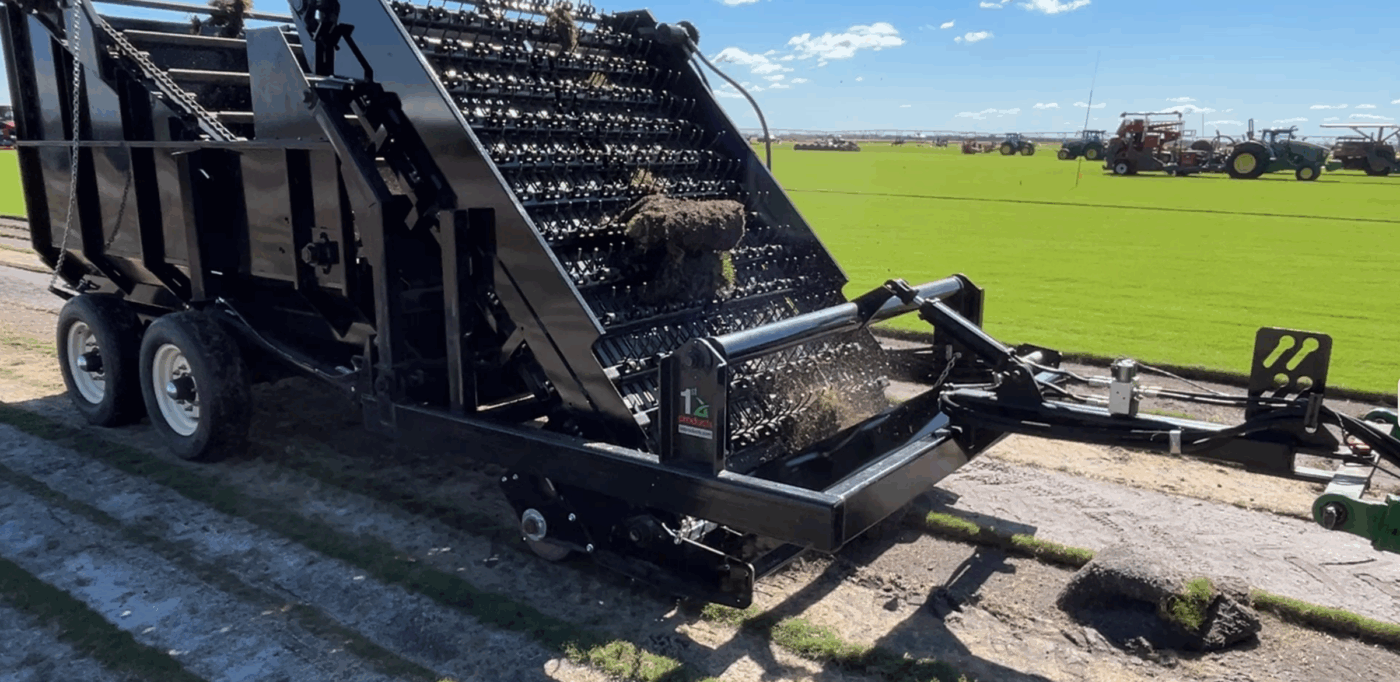
Manual sod scrap cleanup consumes hours that could be spent on productive work. Crews walk fields picking up leftover pieces, loading them onto trucks, and disposing of material that represents both wasted product and wasted time. The Sod Scrap Harvester from 1st Products mechanizes this process, collecting debris in a single pass while preparing fields for the next crop cycle. For most operations, the sod scrap harvester ROI calculation shows payback within the first season.
The economics are straightforward. Labor costs for manual cleanup, equipment hours for debris handling, and lost production time while fields sit in preparation all factor into the total expense of traditional methods. The Sod Scrap Harvester eliminates or drastically reduces each of these costs. Understanding the complete financial picture requires examining both direct savings and the indirect benefits that compound throughout the growing season.
The Real Cost of Manual Sod Scrap Cleanup
Sod harvest rarely achieves perfect efficiency. Edge pieces, turn rows, and areas where cutters overlap leave material scattered across the field. On a typical 10-acre harvest, leftover scraps can amount to several thousand square feet of material that needs collection before field preparation begins.
Manual cleanup typically requires three to four workers spending four to six hours per 10 acres, depending on the amount of scrap and field conditions. Using current farmworker wage data from the U.S. Bureau of Labor Statistics, with agricultural equipment operators averaging $22.63 per hour, the labor cost alone runs $270 to $540 per 10-acre section. For a 100-acre operation harvesting three crop cycles per year, annual labor costs for scrap cleanup can exceed $12,000.
Equipment costs add to the total. Tractors, loaders, and trailers dedicated to scrap collection burn fuel, require maintenance, and occupy time that could be spent on revenue-generating activities. Even at conservative estimates, equipment operation adds $50 to $100 per 10-acre cleanup to the overall cost.
Disposal represents another expense, particularly for operations without on-site composting capacity. Hauling loads of mixed soil and vegetation to disposal sites costs both time and money. Some operations attempt to spread scrap material back across fields, but this practice can introduce weed seeds and create uneven surfaces that complicate replanting.
The opportunity cost may exceed direct expenses. Every hour fields spend waiting for cleanup completion is an hour delayed in returning to production. In regions with long growing seasons, these delays prevent operations from maximizing their annual crop capacity. According to Purdue University research on sod production economics, production cycle efficiency directly impacts profitability, with faster turnaround enabling more crops per acre annually.
How the Sod Scrap Harvester Changes the Economics
The Sod Scrap Harvester mechanizes collection, loading, and field leveling in one continuous operation. As the machine moves across the field, rotating brushes gather loose material onto a conveyor that deposits it into a trailing wagon. The same pass levels surface irregularities left by harvest equipment, creating a smooth seedbed ready for immediate preparation and planting.
Single-operator functionality eliminates the need for crews dedicated to cleanup. One person operating the Sod Scrap Harvester completes work that previously required multiple workers, spending most of a day. This labor reduction translates directly into cost savings that begin accruing with the first use.
Speed matters when multiple fields need attention simultaneously. The mechanized system covers 10 acres in approximately two hours, compared to the four to six hours manual methods require. This efficiency allows farms to keep harvest and cleanup operations moving together rather than creating bottlenecks where harvested fields wait days for cleanup crews to become available.
The collected material is concentrated in one location rather than being scattered across the field or requiring multiple disposal trips. Farms with composting operations benefit from having scrap delivered directly to processing areas. Operations without composting can make single disposal runs rather than accumulating partial loads over days or weeks.
Surface preparation quality improves because the machine levels while collecting. Manual cleanup focuses on removing debris but doesn’t address the surface variations that develop during harvest. The Sod Scrap Harvester handles both tasks, reducing or eliminating the need for separate leveling operations before replanting.
Calculating Your Sod Scrap Harvester ROI
The payback calculation starts with quantifying current cleanup costs. A farm harvesting 150 acres three times per year faces 450 acres of post-harvest cleanup annually. At $320 per 10 acres for labor and equipment (a conservative middle estimate), total annual costs reach $14,400. This figure represents the baseline against which mechanized cleanup should be compared.
The Sod Scrap Harvester eliminates approximately 75 percent of manual labor costs by replacing crew-based cleanup with single-operator mechanization. Using the same 150-acre, three-cycle example, labor savings alone total roughly $10,800 annually. Equipment operating costs drop by similar percentages as tractor hours shift from low-value debris handling to higher-priority tasks.
Accelerated field turnaround creates additional value that’s harder to quantify precisely but equally real. Reducing cleanup time from five hours to two hours per 10-acre section saves three hours multiplied across 450 annual acres, totaling 135 hours. At even modest valuations of productive time, this represents thousands of dollars in opportunity cost elimination.
Equipment investment for the Sod Scrap Harvester should be evaluated against these annual savings. Most operations find that combined labor reduction, efficiency gains, and improved field turnaround support payback periods of 12 to 18 months. The machine’s durability ensures it continues generating savings for many years beyond initial payback, making the return on investment substantially positive over its service life.
Financing options make the investment more accessible. Many operations lease equipment initially or structure purchases with seasonal payment schedules that align with harvest revenue. These approaches limit cash flow impact while providing immediate operational benefits. For guidance on evaluating equipment investments across your operation, see our article on measuring turf equipment ROI.
Beyond Direct Costs: Operational Benefits
Labor quality improves when crews shift from manual cleanup to skilled equipment operation or other productive tasks. Walking fields picking up scrap represents low-value work that’s physically demanding and repetitive. Redirecting that labor toward crop monitoring, equipment maintenance, or other activities that require judgment and expertise generates returns beyond simple cost reduction.
Equipment utilization becomes more efficient when machines aren’t tied up in cleanup operations. Tractors and loaders freed from debris collection can support planting, irrigation system maintenance, or other time-sensitive activities. This flexibility matters most during peak seasons when every piece of equipment needs to contribute maximum value.
Schedule predictability increases because mechanized cleanup doesn’t depend on crew availability or weather windows as critically as manual methods. One operator can handle the work regardless of whether additional staff are occupied elsewhere. Rain delays affect mechanized collection less severely than hand labor, helping maintain momentum through variable conditions.
Soil health benefits from the leveling action that accompanies debris collection. Surface uniformity supports even moisture distribution and consistent seed germination. Fields prepared with the Sod Scrap Harvester show fewer problem areas where irregular surfaces caused pooling, dry spots, or uneven establishment. These quality improvements reduce inputs and management attention throughout the crop cycle.
Safety improves when fewer workers spend time in fields during post-harvest operations. Manual cleanup occurs alongside equipment traffic as other activities continue. Mechanizing the work reduces exposure to equipment-related incidents while eliminating the physical strain that repetitive bending and lifting create.
Maximizing Your Investment
Proper operation ensures the Sod Scrap Harvester delivers its full potential value. Adjusting brush speed and conveyor settings for different debris volumes optimizes collection efficiency while minimizing material loss. Most operators develop preferences within the first few acres of use and can fine-tune performance for their specific field conditions.
Timing affects results. Operating soon after harvest, before scattered material dries and becomes more difficult to collect, provides the best efficiency. However, the machine handles both fresh and partially dried scrap, giving operations flexibility to sequence cleanup around other priorities without losing effectiveness.
Maintenance requirements are minimal but important. Regular cleaning of brushes and conveyors prevents buildup that reduces efficiency. Bearing systems and drive components follow standard service intervals. Most farms report that routine maintenance takes less time than the equipment saves on each cleanup operation.
Multiple applications extend equipment value. While sod farms represent the primary market, the Sod Scrap Harvester also serves landscape contractors handling turf renovation projects and athletic field managers dealing with damaged turf removal. Operations with diverse work can apply the equipment across several revenue-generating activities, improving utilization and shortening payback further.
Integration with other equipment creates system efficiencies. Farms already using 1st Products equipment, like the AGRI-vator for field preparation, find that adding the Sod Scrap Harvester completes their post-harvest workflow with complementary equipment from a single manufacturer. This consistency simplifies parts management, training, and service support.
Real-World Results from Sod Producers
A North Carolina sod farm operating 200 acres documented their results after implementing the Sod Scrap Harvester. Labor hours for post-harvest cleanup dropped from 360 hours per crop cycle to 80 hours, a 78 percent reduction. The farm calculated first-year savings of $18,000 in labor costs alone, achieving payback in 14 months.
A Georgia operation emphasized the schedule flexibility that mechanized cleanup provided. Their harvest operations had previously created bottlenecks where cleanup couldn’t keep pace with cutting, leaving fields waiting days for attention. The Sod Scrap Harvester eliminated this constraint, allowing the farm to harvest continuously without artificial pauses for manual cleanup to catch up.
Multiple operations report that field quality improved after mechanizing the cleanup. The leveling action creates more consistent seedbeds than manual collection alone provides. Farms noted better germination uniformity and fewer problem areas requiring extra attention during establishment. These quality improvements contributed to overall profitability even beyond the direct cost savings from reduced labor.
The consistent feedback from commercial operations is that the sod scrap harvester ROI exceeds initial expectations. Equipment productivity, labor savings, and operational flexibility combine to deliver value that justifies the investment quickly and continues generating returns year after year.
Eliminate manual sod scrap cleanup from your operation. Learn more about the Sod Scrap Harvester or contact 1st Products to discuss how mechanized collection fits your farm’s workflow. Calculate your sod scrap harvester ROI with help from equipment specialists who understand sod production economics.