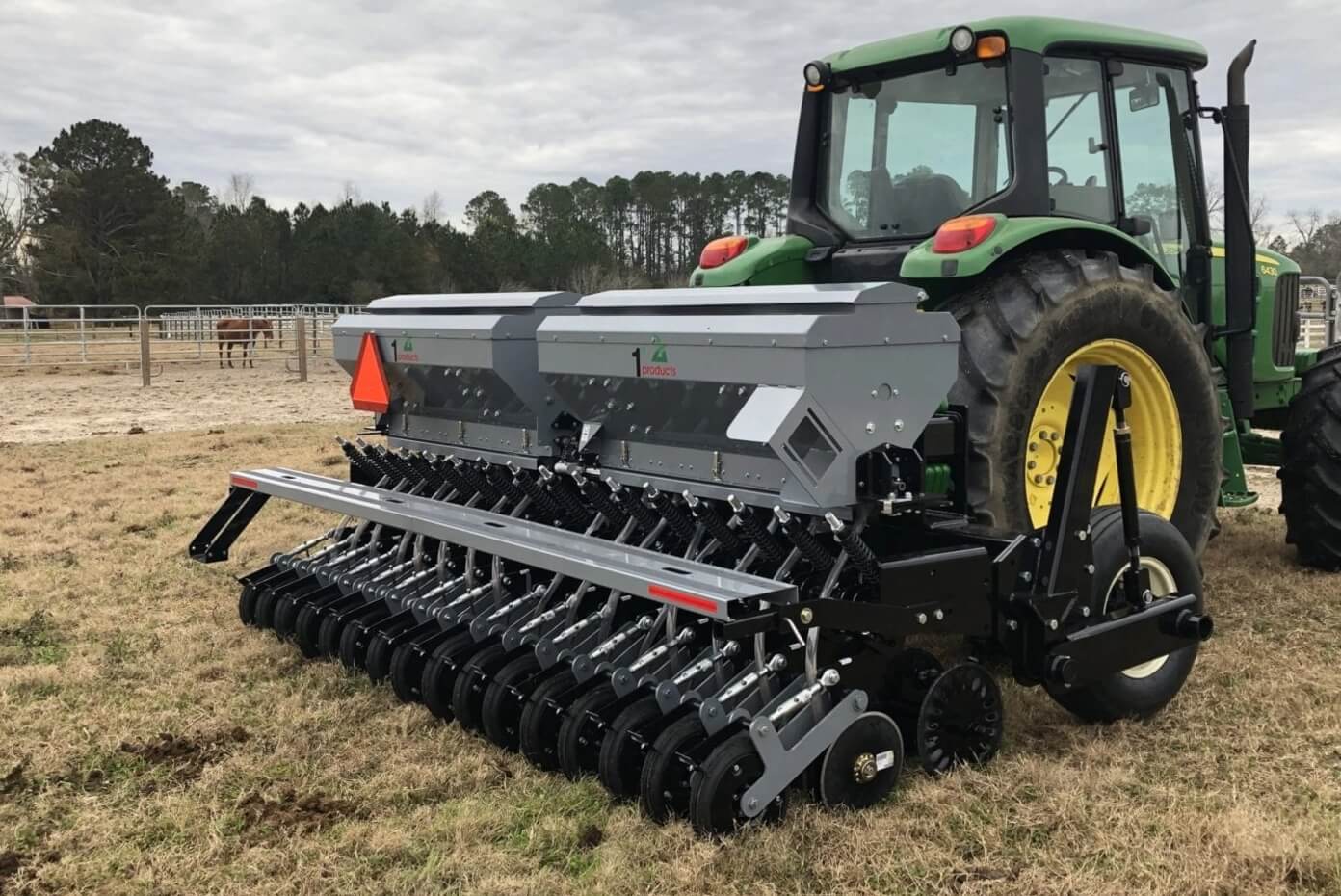
Understanding the Purpose of Seeding Drills
Seeding drills are essential tools for ensuring crop consistency, uniform emergence, and long-term productivity. Whether you’re sowing native grasses, pasture blends, food plots, or row crops, drills give you the ability to control seed depth, placement, and spacing with precision. That level of control directly impacts stand density, early growth stages, and final yield.
These tools also play a vital role in how your field recovers and evolves year after year. Seed drills help close the gap between ecological health and economic return, making them indispensable for both small-acreage landowners and large-scale operators. In systems where timing, efficiency, and conservation matter, seeding technology isn’t just a convenience—it’s a strategic asset.
The importance of proper drill selection is highlighted in The Ultimate Guide to Aeration, Seeding & Fertilization Equipment, which walks through the broader ecosystem of tools that work together to create ideal growing conditions.
What Is a No-Till Drill—and How Does It Work?
A no till drill is built for planting directly into undisturbed soil covered in residue. It uses sharp coulters to slice through crop remains, opening a narrow trench for seed placement. A press wheel then firms the soil over the seed, ensuring good soil contact without the need for prior tillage. This process conserves moisture, protects soil structure, and saves time.
By minimizing soil disturbance, no-till systems help build long-term fertility. Organic matter accumulates, microbial communities remain intact, and erosion is reduced. These benefits make no till drills an important tool in regenerative agriculture and sustainable land management. They’re especially useful in rotation systems where cover crops or small grains are frequently interplanted.
The Agriculture Wholegoods lineup from 1st Products includes equipment that supports this no-till approach with the ruggedness needed for varying field conditions. With durability, adjustability, and proven field results, these tools meet the high standards of conservation-minded growers.
How Conventional Drills Operate and When They’re Useful
Conventional drills, by contrast, require a prepared seedbed. The field is typically disked, tilled, or harrowed before planting, which allows for smoother seed placement and easier equipment operation. These drills are often lighter and less complex than their no-till counterparts, making them a practical option for fields that are already prepped.
One of the benefits of conventional drills is their ability to incorporate seed evenly when soil is loose and debris-free. This setup can be especially advantageous when dealing with high-clay soils that need to be broken up prior to planting or when renovating severely degraded fields. In these scenarios, a conventional drill provides fast, uniform results without requiring specialized configurations.
They’re also ideal for seasonal use on food plots or managed turf areas, where pre-plant tillage is already planned as part of soil revitalization. For growers prioritizing simplicity or working in newly cleared land, the reliability and accessibility of conventional drills are strong selling points.
Comparing Key Outcomes: Soil Health, Efficiency, and Yield
The decision between a no till drill and a conventional drill should start with your soil. No-till systems protect the soil structure, reduce erosion, and improve water retention. When practiced over several years, they contribute to measurable gains in organic matter and overall field resilience.
Tillage-based systems can sometimes offer a short-term boost, especially when compacted soils need to be loosened or when managing weed seed banks. However, repeated tillage leads to breakdown of soil aggregates and a decline in microbial activity over time. Balancing short-term success with long-term sustainability is where thoughtful drill selection becomes vital.
Yield outcomes will depend on weather, field conditions, and operator practices. In well-managed systems, no-till can match or even surpass conventional yields while using fewer inputs. For more insight into how drill choice fits into overall soil performance, see How Field Aerators Improve Soil Health & Crop Yields, which explores the value of non-invasive soil improvement alongside modern seeding practices.
Cost Considerations and Time Management
Cost is another critical difference between the two systems. No till drills tend to have a higher initial purchase price due to their added components—coulters, down-pressure systems, and stronger frames. But they save time and labor by eliminating tillage passes, reducing the wear and tear on both equipment and operators.
Conventional drills are typically more affordable up front and simpler to maintain. They work well in operations where soil prep is already integrated into the planting schedule. However, they may require more fuel and time due to the need for multiple passes to prepare the seedbed. That extra time and energy can add up quickly during peak planting seasons.
Time is money, and smart equipment choices go a long way. If you’re considering other options to reduce labor and input waste, explore How a Grass Seeder Can Save You Time & Money to see how strategic equipment pairings can create more efficient workflows for large and small plots alike.
Equipment Versatility Across Crops and Property Types
No till drills shine in diverse environments. They can plant through heavy residue, operate on rolling terrain, and maintain consistent depth without repeated field prep. This makes them perfect for rotating between cover crops, cash crops, and perennial systems across various acres with minimal soil disturbance.
Conventional drills are often preferred for single-use or fixed-season applications like pasture renovation or wildlife plot planting. Their simplicity and dependability are useful for operators who favor manual field prep and want straightforward, no-fuss operation. For multi-use professionals managing both turf and field crops, a flexible machine is key.
That’s where the equipment found in Turf Wholegoods comes in. These tools support consistent performance across variable conditions—whether on athletic turf, public greenspaces, or pasture—without sacrificing efficiency or quality.
Making the Right Choice Based on Your Field Conditions
To choose the right drill, you need to know your land. Sandy loam soils that hold moisture poorly may benefit from no-till to preserve ground cover, while clay-heavy or wet fields might need conventional prep for proper drainage and plant establishment. Fields with slopes or erosion issues are strong candidates for no-till planting to keep nutrients in place.
Weather patterns, residue levels, and even crop choice also influence your equipment needs. For instance, large-seeded crops like beans may perform better with precision depth control, while grasses may require fine-tuned seeding rates. Ultimately, evaluating your soil texture, slope, cropping history, and equipment support will point you toward the right path.
Not sure where to begin? The experts at 1st Products can help you analyze your field’s needs and select equipment that improves outcomes without unnecessary cost or complexity.
Why the Right Drill Is Only Part of the System
A no till drill or conventional drill is just one piece of the larger productivity puzzle. The surrounding system—residue management, thatch control, aeration, and fertilization—has a direct impact on whether seeds emerge evenly and thrive through maturity. Even the best seed placement won’t succeed if roots can’t access air, water, and nutrients.
That’s why integrative practices are so important. Vertical cutting tools like verticutters can reduce surface buildup that blocks light and moisture. Aerators create space for roots and nutrients to move deeper. Fertilizers must be placed where they can actually be absorbed. All of these factors work in tandem with your drill.
To see how turf-specific tools fit into this strategy, read How a Verticutter Improves Turf Quality & Reduces Thatch. It provides a detailed look at how small adjustments in surface prep make a big difference in seed success rates—especially in densely thatched or compacted areas.
Pulling the System Together for Smarter Seeding
Choosing between a no till drill and a conventional drill isn’t just about features or specs. It’s about understanding your soil, your goals, and how each tool complements the full spectrum of land care. Both types of drills offer real value—when used in the right context with the right supporting practices.
For long-term soil health and lower input costs, no-till is hard to beat. For rapid results or simple seasonal planting, conventional may be more practical. Whichever route you take, it should fit into a larger plan for seedbed prep, compaction management, and sustainability.
For personalized advice or to explore your options further, reach out through the Contact Us page.