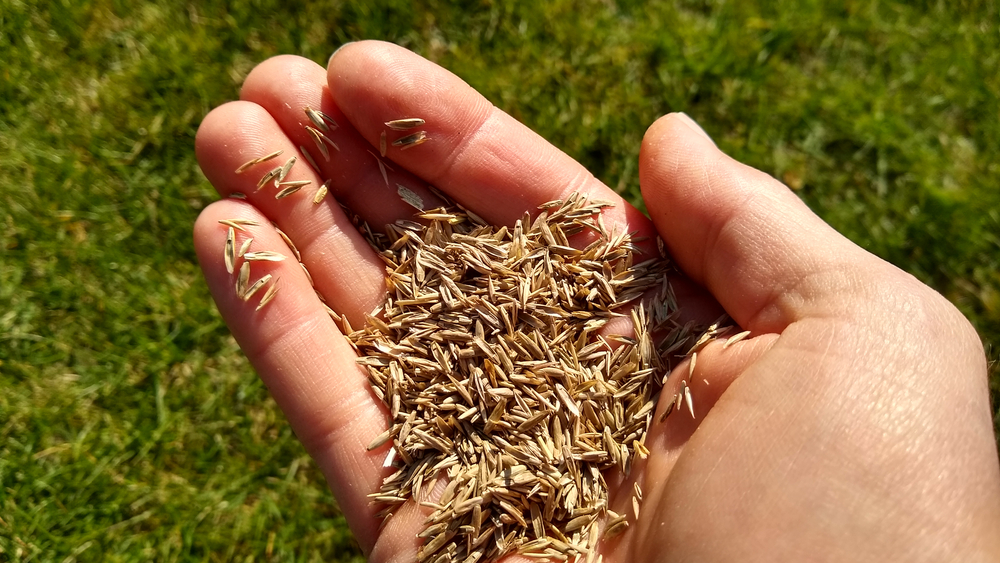
Overseeding is one of the most reliable ways to thicken thin turf, fill in bare patches, and improve the overall density and appearance of a maintained lawn or commercial property. But a lot of overseeding efforts fall short, not because the seed is bad or the timing is wrong, but because the method of seed delivery leaves too much to chance.
Broadcast spreading seed over existing turf and watering it in is the most common approach, and it’s also the least reliable one. Seed that sits on the surface without making direct contact with the soil faces a long list of obstacles before it ever has a chance to germinate: drying out between waterings, displacement from wind or rain, competition from existing turf, and predation from birds. The result is often uneven coverage, poor germination rates, and turf that looks marginally better than it did before instead of genuinely improved.
A lawn seeder addresses these problems by changing how seed gets placed. This guide covers what makes lawn seeders more effective for overseeding, when to use one, and what to look for in equipment built for professional results.
The Core Problem with Broadcast Overseeding
To understand why a lawn seeder performs better, it helps to be specific about what goes wrong with broadcast overseeding.
The biggest issue is seed-to-soil contact, or more accurately the lack of it. Germination requires moisture, warmth, and direct contact between the seed and the soil. When seed sits on top of thatch, dead material, or existing turf canopy, it doesn’t have reliable access to any of these things. Moisture evaporates quickly from the surface. The seed can’t anchor into the soil. And the existing turf competes aggressively for the light and nutrients that germinating seedlings need.
Research from Penn State’s Center for Turfgrass Science has consistently shown that seed-to-soil contact is the single most critical factor in overseeding success, outweighing seed variety selection, fertilization timing, and even irrigation frequency in terms of its impact on germination rates.
The second issue is consistency. Broadcast spreading creates uneven seed distribution, with heavier concentrations where the spreader path overlapped and thin or missing coverage in gaps between passes. On small residential lawns this is manageable. On larger commercial properties or athletic fields, it produces results that look inconsistent and require follow-up passes to correct.
What a Lawn Seeder Does Differently
A lawn seeder uses mechanical seed placement to put seed into the soil profile at a controlled depth rather than depositing it on the surface. Depending on the design, this happens through slit seeding, where thin blades cut slits into the turf and seed drops directly into the opening, or through other forms of mechanical seed insertion that create direct soil contact.
This changes the germination environment in several important ways.
Seed placed in a slit or opening in the turf surface has immediate contact with the soil. Moisture from the surrounding soil wicks into the seed rather than the seed depending on irrigation to stay wet. The seed is also sheltered from surface evaporation and from displacement by wind, rain, or foot traffic.
Seed placement depth is also consistent across the pass. A well-calibrated lawn seeder puts seed at the same depth across the entire area, which means germination happens more uniformly and the resulting turf fills in more evenly. That consistency is particularly valuable on commercial properties and athletic fields where appearance and surface uniformity matter.
The Sports Turf Managers Association (STMA) identifies mechanical seeding methods as significantly more effective than broadcast overseeding on athletic surfaces, particularly in situations where the turf can’t be taken fully out of play and needs to recover quickly.
When Overseeding with a Lawn Seeder Makes the Most Sense
A lawn seeder is the right tool for overseeding in several specific situations.
Thin or worn turf with existing coverage. When the turf isn’t bare but has thinned out due to traffic, drought stress, or seasonal dieback, a lawn seeder can introduce new seed without disturbing the existing coverage or requiring complete renovation.
Cool-season grass overseeding into warm-season turf. In regions where bermudagrass or other warm-season varieties go dormant in winter, overseeding with ryegrass or other cool-season varieties for winter color and coverage is common. A lawn seeder improves the success rate of this process by getting seed through the warm-season canopy and into the soil rather than leaving it sitting on top of dense bermuda.
Fall overseeding for spring improvement. Fall is the best time to overseed cool-season grasses like tall fescue, Kentucky bluegrass, and perennial ryegrass. Soil temperatures are still warm enough to support germination, air temperatures are cooling down to reduce stress on new seedlings, and weed competition is lower than in spring. A lawn seeder maximizes the results of this window.
Recovery after stress events. After drought, heavy traffic, or disease damage leaves areas thin or bare, a lawn seeder helps establish new turf faster than broadcast methods, which matters when the property needs to recover on a schedule.
Preparing for Better Results
A lawn seeder performs best when the turf surface is prepared to receive seed effectively. A few steps before seeding make a meaningful difference in the outcome.
Mowing short before overseeding reduces competition from existing turf and gives the seeder better access to the soil surface. A mowing height of about an inch and a half to two inches before seeding is a reasonable target for most cool-season applications.
Aerating before overseeding improves results significantly on compacted or heavily trafficked turf. The 1st Products AERA-vator is well-suited for this step. Its vibrating tine system opens the soil profile without tearing up the surface, creating better conditions for root development on newly germinated seed. Running the AERA-vator before your seeding pass means new seed goes into a more receptive soil environment from the start.
Removing excess thatch before seeding also helps. If thatch depth is over half an inch, a verticutting pass before seeding pulls up accumulated organic material and opens the surface so the seeder can make better soil contact.
What to Look for in a Lawn Seeder
Professional overseeding applications call for equipment that handles the conditions and workloads of commercial turf management. A few criteria separate equipment that delivers consistent results from equipment that performs inconsistently in real-world conditions.
Seed depth control. The ability to set a consistent seeding depth and maintain it across varying soil conditions is foundational. Equipment without reliable depth control produces inconsistent germination.
Seed rate adjustment. Different grass species require different seeding rates, and overseeding rates differ from bare-ground seeding rates. Accurate, adjustable seed output control reduces waste and improves coverage consistency.
Surface impact. On maintained turf that needs to stay presentable and functional, equipment that seeds effectively without leaving the surface in rough condition speeds recovery and reduces complaints from property owners or facility managers.
Build quality for commercial use. Overseeding is a repeat process across multiple properties and multiple seasons. Equipment that holds up to that workload without consistent mechanical issues is worth the investment.
The Difference Consistent Overseeding Makes
Turf that gets properly overseeded on a regular schedule is fundamentally more resilient than turf that doesn’t. Density keeps weed pressure down. A thicker stand handles traffic better and recovers from stress events faster. And properties that look consistently good are easier to retain as clients and easier to justify maintenance investment on.
The equipment you use for overseeding is one of the variables you can actually control. Getting that variable right with a lawn seeder that places seed properly rather than leaving it to chance on the surface is one of the more straightforward ways to improve your results without changing anything else about your program. Explore the 1st Products turf equipment lineup to see how purpose-built turf tools support better overseeding outcomes, or contact the team to talk through which equipment configuration fits your properties and your seeding schedule.