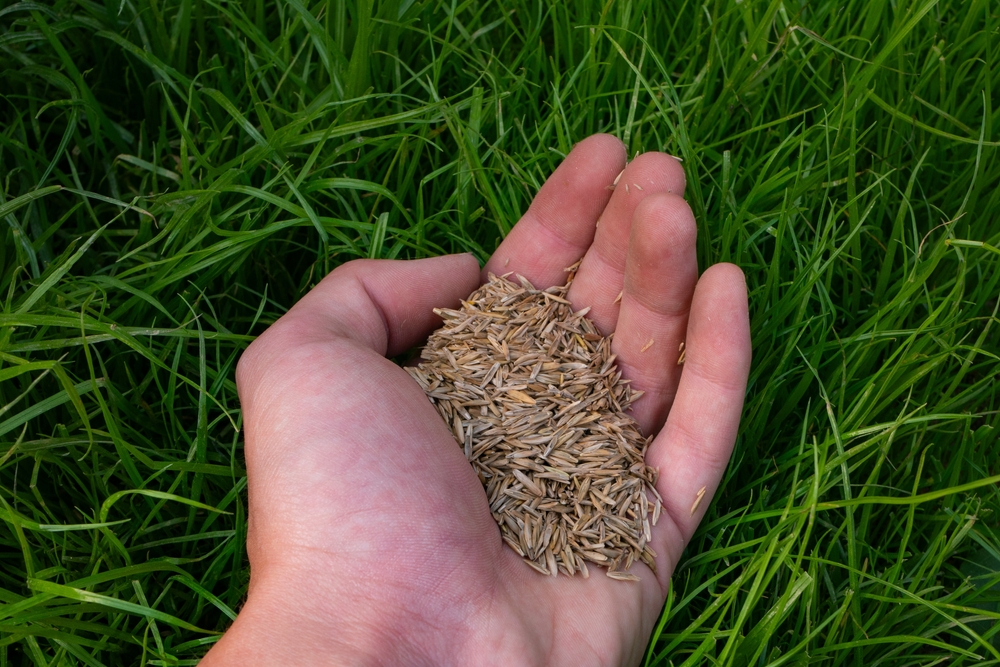
If you’ve ever searched for “grass seeder” and come back with results that look nothing like what you actually need, you’re not alone. The terms grass seeder and lawn seeder get used interchangeably all the time, but for turf managers and commercial operators, they describe two very different categories of equipment with very different outcomes.
Picking the wrong one doesn’t just slow down your job. It can mean poor germination, uneven stands, and results that require expensive remediation to fix. Here’s how to tell the difference, when each tool makes sense, and what actually drives turf results in the field.
What Is a Lawn Seeder?
A lawn seeder is typically designed for residential or light commercial use. Most homeowners and property managers picture this as a broadcast or drop spreader, a walk-behind unit that distributes seed across the surface of existing turf or bare ground.
Lawn seeders are convenient and easy to operate, but they have a fundamental limitation: they leave seed on top of the soil. Surface-distributed seed is exposed to wind drift, bird predation, and moisture loss before it ever has a chance to germinate. According to the University of Minnesota Extension, seed-to-soil contact is the single most important factor in successful turf establishment, and surface seeding provides the least of it.
Lawn seeders work fine for light overseeding on healthy turf where you’re just filling in thin areas and some seed loss is acceptable. For anything more demanding, the limitations show up fast.
What Is a Grass Seeder?
A grass seeder built for commercial turf work is a different animal entirely. These machines, including slit seeders, slice seeders, and no-till drill seeders, are engineered to place seed directly into the soil at a controlled depth, maximizing seed-to-soil contact and protecting seed from the elements from the moment it’s planted.
Rather than scattering seed across the surface, a commercial grass seeder cuts narrow furrows or slits into the ground, drops seed at the correct depth for the species being planted, then closes the soil back around it. The result is dramatically better germination rates, faster stand establishment, and a far more uniform turf surface.
This is the equipment that golf courses, sports field managers, and large-scale turf operations rely on when the results actually matter.
Why the Distinction Matters for Turf Professionals
For a homeowner throwing down some fescue in a thin backyard, a basic lawn seeder does the job well enough. For turf managers, landscapers, and commercial operators, the stakes are different.
When you’re establishing a new sports field, renovating a golf course rough, or seeding a large commercial property, inconsistent germination and uneven stands aren’t just aesthetics problems. They’re revenue problems. Clients notice. Callbacks cost money.
A commercial grass seeder eliminates the variability that surface seeding introduces. Seed placement depth is consistent across every row. Seeding rate is metered precisely rather than left to the operator’s walking speed or wind conditions. The stand that comes up reflects the quality of the seed, not the luck of the weather.
The AERA-vator from 1st Products takes this a step further by combining soil aeration and seeding in a single pass, a workflow that consistently outperforms traditional core aeration followed by broadcast overseeding for both speed and turf density.
Matching the Tool to the Job
Not every seeding job needs the same piece of equipment. Here’s a practical breakdown:
Light overseeding on healthy residential turf. A broadcast or drop lawn seeder works fine here. Seed loss is acceptable when you’re filling in a mostly healthy stand and conditions are favorable.
Thin or damaged commercial turf requiring renovation. This is where a slit seeder or commercial grass seeder is the right call. Seed needs to reach the soil to compete with existing grass and thatch. Surface seeding in this situation wastes seed and produces inconsistent results.
New turf establishment on bare ground. A no-till drill seeder or primary grass seeder gives you the best stand from scratch, particularly on larger acreage where consistency across the whole site matters.
High-traffic areas like sports fields or golf courses. Commercial grass seeders are the industry standard here. The denser, more uniform stands they produce hold up better under stress and recover faster after damage.
The Equipment Quality Gap
One thing that often gets overlooked in the grass seeder vs lawn seeder conversation is equipment quality itself. Even within the commercial grass seeder category, there’s a wide range of build quality, seed metering precision, and versatility.
Key things to look for in a commercial grass seeder include adjustable seeding depth, accurate seed rate control across different species, durability suited to the acreage and terrain you’re working, and the ability to handle multiple grass types without requiring a full equipment swap.
1st Products’ commercial seeding equipment lineup is built specifically around these requirements, with machines designed to handle everything from fine fescue and bermuda grass to larger seed varieties across a range of property types. If you’re exploring all your options for a full turf equipment setup, the turf equipment page is a good place to get an overview.
The Bottom Line
Grass seeder and lawn seeder aren’t just different names for the same thing. They represent different approaches to turf establishment with meaningfully different outcomes, and using the wrong tool for the job is one of the most common and costly mistakes turf professionals make.
If your current seeding setup isn’t delivering the stands your clients expect, it may be less about the seed and more about how it’s getting into the ground.
Ready to find the right commercial seeding equipment for your operation? Browse the 1st Products grass seeding lineup or contact the team to talk through your specific needs.