If you’ve put real time and money into a food plot program, you already know that not all seeding methods produce the same results. The seed variety matters. The soil preparation matters. Timing matters. But one of the variables that gets underestimated most consistently is how the seed gets into the ground in the first place.
Broadcast seeding is the most common method among food plotters, largely because it’s the most accessible. You don’t need specialized equipment. You can cover ground quickly. And it works well enough in ideal conditions that it’s easy to assume the method itself isn’t the limiting factor when results disappoint.
A food plot drill takes a fundamentally different approach, placing seed directly into the soil at a controlled depth rather than distributing it across the surface and relying on environmental conditions to do the rest. The difference in results, particularly in challenging conditions, is significant enough that hunters and land managers who make the switch rarely go back.
This guide breaks down how each method works, where each one falls short, and how to think about which approach fits your property and your goals.
How Broadcast Seeding Works
Broadcast seeding distributes seed across the soil surface using a spreader, either a hand-held unit, an ATV-mounted spreader, or a larger ground-driven implement. The seed lands on the surface and relies on rainfall, irrigation, or mechanical incorporation to work its way into contact with the soil.
The appeal is simplicity. Broadcast equipment is inexpensive, widely available, and fast to operate. On a well-prepared seedbed with recently tilled, loose soil and reliable rainfall in the days following seeding, broadcast methods can produce acceptable results, particularly with larger seeds like corn, soybeans, or cereal grains that have more stored energy to push through surface conditions.
The problems start when conditions aren’t ideal, which is most of the time in real food plot situations.
Seed sitting on the surface is exposed to every variable that can prevent germination. Birds and rodents find broadcast seed easily. Rainfall can wash seed into low spots or off slopes before it has a chance to germinate. Wind moves light seed away from target areas. And in dry conditions, surface seed dries out between rain events and either fails to germinate or germinates and then dies before the root system can reach consistent soil moisture.
Thatch, residue, and existing vegetation also interfere. Broadcast seed that lands on dead material, heavy residue, or an existing grass canopy often never reaches the soil at all. Without soil contact, germination doesn’t happen regardless of how good the seed is or how well the plot was fertilized.
How a Food Plot Drill Works
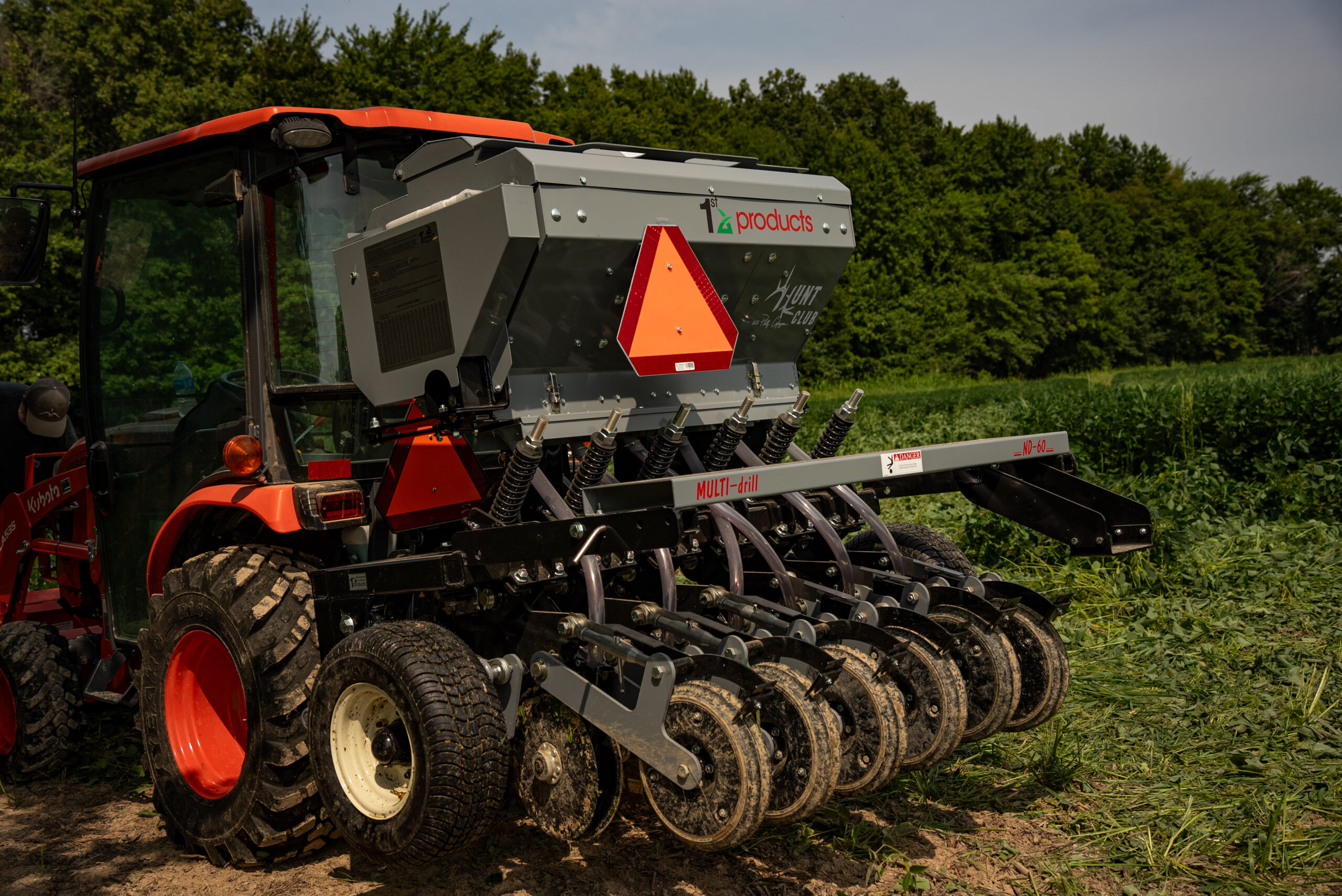
A food plot drill places seed directly into the soil at a calibrated depth using disc openers or coulters that cut through the surface and deposit seed into the resulting slot. The slot closes around the seed, creating direct soil contact from the moment of placement.
This changes the germination environment fundamentally. Seed placed at the right depth has immediate access to soil moisture. It’s protected from surface evaporation, displacement, and predation. It germinates more uniformly because depth and soil contact are consistent across the plot rather than variable depending on where each individual seed happened to land.
No-till capability is particularly important for food plot applications. Most food plot sites can’t be fully tilled without significant site preparation work, and in many cases tilling creates more problems than it solves by exposing weed seed, causing erosion on slopes, and disturbing root systems of surrounding vegetation. A food plot drill that can cut directly into unprepared or minimally prepared ground removes the need for tillage entirely in most situations.
The 1st Products MULTI-drill is built specifically for these conditions. Available in widths from 5 to 12 feet, it handles the variable terrain, residue, and unprepared ground that food plotters actually work with. Its dual seed box configuration handles mixed seed types in a single pass, which matters when you’re planting blended food plot mixes that combine small seeds like clover with larger seeds like brassicas or cereal grains. That combination is difficult or impossible to manage effectively with broadcast equipment and typically requires separate passes with different spreader settings.
Where Broadcast Seeding Falls Short
The limitations of broadcast seeding show up most clearly in specific conditions that are common in food plot work.
Slopes and irregular terrain. Broadcast seed on a slope is vulnerable to washout. Even a moderate rainfall event after seeding can move seed significantly, creating bare areas uphill and concentrated patches downhill. A drill places seed into the soil where it stays put regardless of rain.
Dry conditions. Surface seed in dry conditions desiccates quickly. Without consistent surface moisture, germination either doesn’t happen or happens incompletely, leaving patchy stands that never reach the density food plotters are after. Drilled seed at proper depth has access to subsurface moisture that surface conditions don’t affect.
Heavy residue or thatch. Broadcast seed in a plot with existing vegetation, residue from a previous crop, or heavy thatch often ends up sitting on top of that material rather than reaching the soil. Germination in these conditions is poor regardless of rainfall because soil contact never happens.
Small or light seeds. Clover, chicory, brassicas, and similar small-seeded food plot species are particularly difficult to broadcast effectively. They’re light enough to move in wind, easy for birds to find, and often too small to push through any surface material to reach the soil. Drilled at proper depth, these same species establish reliably and consistently.
Where Broadcast Seeding Still Makes Sense
Broadcast seeding isn’t the wrong choice in every situation. There are conditions where it produces reasonable results and where the simplicity advantage is a legitimate consideration.
On a freshly tilled, smooth seedbed with good soil contact available at the surface and reliable rainfall in the forecast, broadcast seeding of larger-seeded species can work acceptably. If you’ve just run a disk over a plot and the soil is loose and uniform, broadcast corn, beans, or cereal grains have a reasonable chance of getting enough soil contact through rainfall or a cultipacking pass to germinate well.
Aerial or large-scale broadcast applications also make sense in situations where equipment access is limited and the sheer volume of seed going down compensates somewhat for lower germination rates. Some land managers broadcasting large acreages of native grasses or cover crops accept lower germination percentages as part of the cost of working at that scale without drill equipment.
But for food plotters who are investing in quality seed, soil amendments, and site preparation to produce high-performing plots, accepting broadcast germination rates when a drill would deliver substantially better results is leaving a significant return on investment on the table.
The Germination Rate Difference
The practical gap between broadcast and drilled seeding shows up most clearly in germination rates and stand density. Research from land-grant universities and wildlife management programs consistently shows that drilled seed outperforms broadcast seed in germination rate under real-world field conditions, often by a substantial margin depending on species and conditions.
The University of Tennessee Extension’s wildlife food plot program recommends drill seeding over broadcast seeding for most food plot species, noting that improved seed-to-soil contact is the primary driver of the performance difference and that the advantage is most pronounced for small-seeded species and in conditions where surface moisture is variable.
For hunters and land managers who measure success by plot performance in season, that germination rate difference translates directly into plot density, browse availability, and whether the plot actually holds and attracts wildlife the way it’s supposed to.
Choosing the Right Approach for Your Property
The right seeding method depends on what you’re planting, where you’re planting it, and what equipment you have access to.
If you’re working with small plots in variable terrain, planting mixed seed types, or dealing with conditions that make broadcast establishment unreliable, a food plot drill is the higher-performing tool and the investment pays off in better plot results season after season.
If you’re working at a scale where drill access is impractical, planting on freshly prepared ground, or seeding species where broadcast performance is acceptable, broadcast methods are a workable approach with the understanding that germination rates and stand consistency will be lower than drilled results.
Many serious food plotters use both, drilling their primary plots where equipment access allows and broadcasting in locations where terrain or access make drilling impractical. Explore the 1st Products MULTI-drill to see how it’s built for the specific demands of food plot and no-till seeding work, or contact the team to talk through which width and configuration fits your property and your planting goals.