Every food plotter eventually asks the same question.
Fall or spring?
The honest answer is both, for different reasons.
The two planting windows serve different goals, favor different seed, and reward different timing. Treating them the same is one of the most common reasons plots underperform. A spring mix planted in the fall window won’t establish before frost, and a fall brassica blend planted in spring bolts and goes to waste. Getting the season right is half the battle. Getting the seed in the ground correctly is the other half.
This guide breaks down what each planting window is for, what to plant in each, and why seed placement matters as much as timing in both.
What Fall Planting Is For
Fall is the window most serious hunters plan their year around, because a fall plot is built to peak during hunting season.
Cool-season plantings go in from late summer into early fall, depending on your region, and they’re designed to establish quickly, put on growth through cooler weather, and provide high-quality forage exactly when deer are patterning food sources ahead of and during the season.
What to plant in fall: brassicas like turnips, radishes, and rape; cereal grains like winter wheat, oats, and rye; and clovers and other legumes that overwinter and green up again in spring. Many food plotters plant a blend of all three so the plot offers something attractive across the full temperature swing from early season through late.
The timing is less forgiving than it looks. Plant too early and heat and drought stress young seedlings. Plant too late and there isn’t enough growing time before frost shuts things down. Most fall failures trace back to a plot that went in a few weeks outside its window, or one where the seed never established well enough to matter.
What Spring Planting Is For
Spring plots serve a different purpose. They’re about nutrition through the demanding months, antler growth, fawn recruitment, and does carrying and raising young, when a herd’s nutritional needs peak.
Warm-season plantings go in after the last frost, once soil temperatures are reliably warm enough for germination. These plots grow through the summer and provide high-protein forage during the period that shapes herd health and next year’s antler potential.
What to plant in spring: soybeans, cowpeas, and lablab for protein; corn and grain sorghum for warm-season energy and structure; and warm-season annuals like buckwheat and sunn hemp that establish fast and build soil. Perennial clover plots also do well established or maintained in spring.
Spring’s biggest enemy is moisture timing. A plot that goes in ahead of a dry stretch can fail before it establishes, which is exactly where seed placement becomes the deciding factor.
Why How You Plant Matters as Much as When
Timing gets all the attention, but seed placement quietly decides whether either window pays off.
Seed broadcast on the surface sits exposed to birds, washout, wind, and drying. In the fall window, surface seed that doesn’t establish quickly runs out of growing season before frost. In the spring window, surface seed caught by a dry stretch desiccates before its roots reach moisture. Either way, the calendar was right and the plot still failed.
A food plot drill removes that variable. By placing seed at a controlled depth with direct soil contact, it gives seed access to subsurface moisture and consistent germination regardless of whether rain shows up on schedule. That reliability matters most in exactly the conditions both windows tend to throw at you, late-summer heat in fall and dry spells in spring.
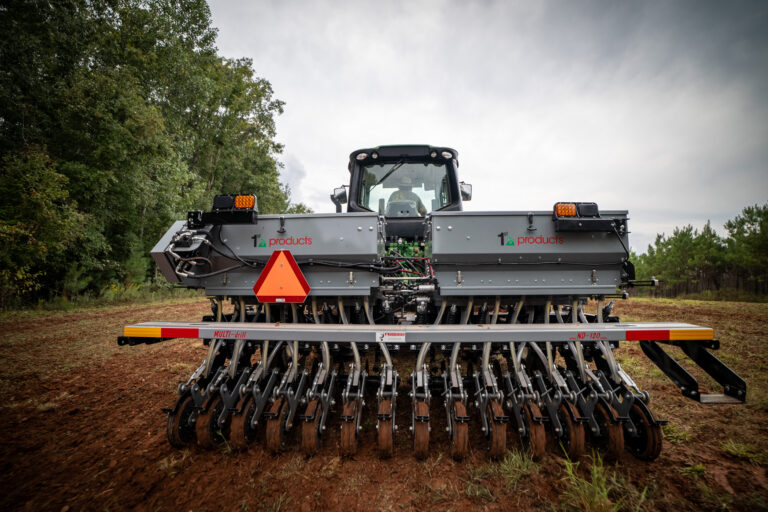
The 1st Products MULTI-drill is built for this across both seasons. Its dual seed box handles the blended mixes that fall plots depend on, combining small seeds like clover with larger brassicas and cereal grains in one pass, and it plants the larger warm-season seed spring plots rely on just as cleanly. Its no-till capability means you can plant into existing residue in either window without tilling, which protects soil moisture and reduces the erosion and weed-seed problems that tillage creates.
Cover Crops and the Off-Season
The window between your primary plots is where cover crops earn their place, and it’s an increasingly important part of a healthy food plot program.
Cover crop planting between fall and spring plots protects and rebuilds soil, suppresses weeds, adds organic matter, and can provide supplemental forage. A rye or clover cover crop drilled after a fall plot holds soil through winter and feeds the next planting. The same seed-to-soil-contact advantage applies: drilled cover crops establish more reliably than broadcast ones, especially the small-seeded species common in cover blends.
Running the same drill across primary plots and cover crops keeps the whole rotation on one machine and one calibration workflow rather than piecing it together across different equipment.
Matching Season, Seed, and Placement
The strongest food plot programs treat fall and spring as two halves of one plan rather than separate events.
Fall plots peak for the season on cool-season blends. Spring plots build herd health on warm-season protein. Cover crops bridge the gap and protect the soil that both depend on. And across all three, a drill that places seed correctly is what turns good timing into a plot that actually establishes.
If you’re building a year-round program instead of chasing one season at a time, the equipment that plants all of it consistently is worth the investment.
Explore the 1st Products MULTI-drill to see how it’s built for no-till food plot and cover crop seeding in every window, or request a quote to talk through the right width and configuration for your property and your planting calendar.