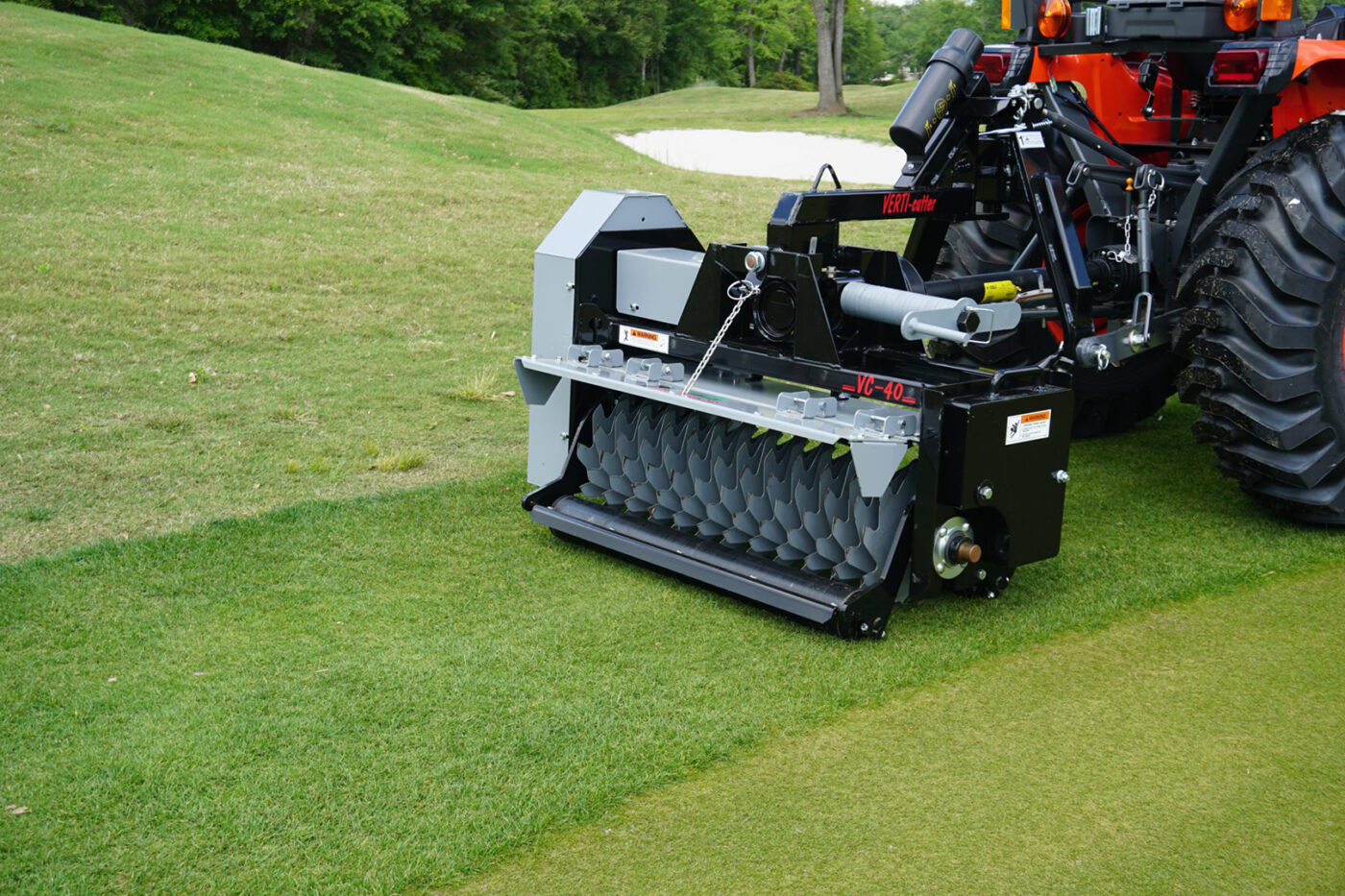
Every turf manager knows the routine. You schedule core aeration, the crew spends hours pulling plugs, and then you face days of cleanup, player complaints, and disrupted schedules. The cores sit on the surface, the field looks rough, and you’re fielding calls about when it’ll be playable again. There’s a reason more operations are walking away from this approach.
Coreless aeration delivers the same soil benefits without the mess, downtime, or logistical headaches. Instead of extracting soil cores, coreless systems use vibrating tines that fracture compacted layers while leaving the surface intact. Fields stay playable, cleanup disappears, and soil structure improves just as effectively. For operations managing tight schedules or high-traffic areas, the difference isn’t subtle.
This shift isn’t about convenience alone. It’s about maintaining performance standards while controlling costs and preserving turf quality. When a golf course can aerate greens without closing holes, or a sports complex can treat fields between weekend games, the operational advantages compound quickly. Understanding why coreless aeration works and when it makes sense requires looking at both the science and the practical realities of modern turf management.
The Core Problem with Traditional Core Aeration
Traditional core aeration has been the standard for decades because it works. Hollow tines punch into the soil and extract plugs, creating channels for air, water, and nutrients to reach the root zone. According to research from the University of Idaho Extension, core aeration effectively reduces compaction and manages thatch buildup in turf systems.
But the effectiveness comes with costs that extend beyond the invoice. Every core pulled to the surface needs management. Some operations leave them to break down naturally, which can take weeks depending on moisture and traffic. Others invest labor hours in sweeping, collecting, or breaking them down with drag mats. Either way, the field doesn’t look or play normally until the process completes.
The timing creates additional challenges. Cool-season grasses benefit most from fall aeration, exactly when athletic fields face their heaviest use. Warm-season turf needs treatment in late spring or early summer, peak season for many golf courses and sports facilities. Traditional core aeration forces a choice between optimal timing and operational continuity.
Soil disturbance adds another variable. While pulling cores relieves compaction, it also disrupts the existing turf canopy. On heavily used fields or during periods of environmental stress, that disruption can create entry points for weeds or slow recovery. Penn State Extension research shows that aggressive soil cultivation during stressful periods can temporarily weaken turf, requiring careful timing and follow-up management.
The equipment itself presents limitations. Core aerators require multiple passes for adequate coverage, and on large properties, the time investment grows quickly. Wet conditions make the work difficult or impossible, and dry soil reduces penetration depth. These constraints don’t make core aeration ineffective, but they do make it inflexible.
How Coreless Aeration Actually Works
Coreless aeration takes a different mechanical approach to the same problem. Instead of hollow tines that extract soil, the system uses solid, vibrating tines that penetrate and fracture compacted layers. The AERA-vator from 1st Products exemplifies this design, with tines vibrating at over 800 cycles per minute while moving through the soil.
The vibration serves a specific purpose. As tines enter the ground, the rapid oscillation creates microfractures in compacted soil rather than displacing it to the surface. This fracturing relieves density while maintaining surface integrity. Water and air can move through these fractures just as effectively as through core holes, but the turf canopy remains largely undisturbed.
Penetration depth varies by model and soil conditions, but most coreless systems reach 3 to 4 inches into the profile. That’s sufficient to address the surface compaction that restricts most turf growth. While it doesn’t penetrate as deeply as some core aerators, the top 4 to 6 inches of soil are where compaction most severely impacts turf health.
The process leaves the surface smooth enough for immediate use. There are no cores to manage, no cleanup crew needed, and no waiting period before resuming normal operations. For facilities that can’t afford downtime, this immediate return to service changes the operational math entirely.
Soil structure improvement happens differently than with core aeration but achieves similar results. The fracturing creates pathways for root expansion and improves drainage without removing soil volume. Over time, these fracture zones allow roots to penetrate deeper and access moisture and nutrients that compacted soil had previously restricted.
When Coreless Aeration Makes the Most Sense
Not every situation calls for coreless methods, but certain scenarios make it the clear choice. High-traffic athletic fields that need to stay playable benefit immediately. When a field manager can aerate on Tuesday and host games on Friday, the scheduling flexibility alone justifies the approach.
Golf courses with demanding play schedules find similar advantages. Aerating greens or fairways without disrupting play means more revenue days and fewer member complaints. Some courses have shifted entirely to coreless methods for routine maintenance, reserving traditional core aeration for annual deep treatments or renovation projects.
Sod farms face different pressures but reach similar conclusions. After harvesting sod, the field needs immediate attention to prepare for the next crop. Traditional aeration creates delays as cores break down or get removed. Coreless systems like the AGRI-vator allow farms to fracture compacted soil and prepare seedbeds in a single pass, shortening the turnaround between harvest cycles.
Operations working with tight labor budgets see direct savings. Coreless aeration typically requires a smaller crew since there’s no cleanup phase. One operator can complete the work without support staff following behind to manage cores or smooth the surface. Those labor hours are redirected to other priorities or simply don’t get scheduled at all.
Weather windows become less restrictive. While excessively wet or dry conditions still matter, coreless systems handle variable moisture better than core aerators. The solid tines don’t plug with wet soil, and they can penetrate slightly drier conditions without losing effectiveness. This flexibility extends the operational window throughout the season.
Facilities managing multiple turf areas appreciate the efficiency. A single coreless aerator can move from practice fields to game fields to surrounding turf without the operational reset that core cleanup requires. The machine keeps working, and the crew maintains momentum rather than alternating between aeration and cleanup cycles.
Comparing Results: Core vs. Coreless Performance
The practical question isn’t which method is theoretically better but which delivers acceptable results under real-world conditions. Both approaches reduce compaction and improve infiltration. The difference lies in how quickly benefits appear and how long they persist.
Studies tracking soil oxygen levels and water infiltration rates show that coreless aeration provides measurable improvement within days of treatment. The fracture zones allow immediate movement of air and water into previously compacted layers. Core aeration shows similar improvements, but the timeline extends as cores break down and channels fully open.
Root development follows a parallel pattern. Turf roots begin exploring the fractured soil zones within weeks, taking advantage of the reduced resistance to expand deeper into the profile. Research from Clemson University demonstrates that proper aeration, regardless of method, stimulates root growth by relieving physical barriers and improving access to moisture and nutrients.
Long-term soil structure depends on more than a single aeration event. Repeated coreless treatments build cumulative benefits as fracture zones intersect and expand. The soil doesn’t compact as severely between treatments because the structure remains more open. Operations that aerate twice annually often find they can reduce treatment intensity over time as soil health improves.
Thatch management presents one area where traditional core aeration may hold an advantage. Pulling cores brings soil to the surface, where microorganisms help break down the thatch layer. Coreless methods don’t provide this benefit directly. However, improved soil oxygen levels from fracturing can enhance microbial activity in the thatch layer itself, supporting decomposition from below.
Cost per acre varies by equipment, labor, and operational scale, but coreless methods typically show lower total costs when cleanup labor is included. The equipment investment may be higher initially, but the operational savings accumulate with each treatment. For operations aerating large acreage multiple times per year, the math tilts decisively toward coreless systems.
Practical Implementation: Getting Started with Coreless Systems
Transitioning to coreless aeration doesn’t require a complete operational overhaul. Most facilities start by using coreless methods for routine maintenance while reserving traditional core aeration for annual deep treatments or specific problem areas. This hybrid approach lets managers evaluate results without committing fully to one system.
Equipment selection matters. Coreless aerators range from walk-behind units suitable for small areas to tractor-mounted systems that cover multiple acres per hour. The AERA-vator line includes models sized for different applications, from compact grounds to large sports complexes. Choosing the right capacity ensures the equipment matches the workload without excess capability sitting idle.
Timing flexibility is one advantage of coreless aeration, but optimal windows still exist. For cool-season grasses, fall remains ideal because the turf is actively growing and can take full advantage of improved soil conditions. Spring treatments work well for warm-season species preparing for peak growth periods. The difference is that scheduling isn’t as rigid since there’s no cleanup phase to coordinate.
Depth settings and spacing require attention during initial setup. Most coreless systems allow operators to adjust tine penetration based on soil conditions and compaction severity. Starting with moderate depth and evaluating results helps prevent over-treatment while ensuring adequate soil fracturing. Tine spacing affects coverage density, and multiple passes at different angles provide more thorough treatment of severely compacted areas.
Follow-up practices enhance results. While coreless aeration doesn’t require the same post-treatment management as core methods, combining the work with overseeding or topdressing maximizes the investment. The fracture zones provide excellent seed-to-soil contact, and topdressing materials can work into the openings to improve surface smoothness and soil quality.
Staff training ensures consistent results. Operators need to understand how soil moisture affects penetration, how to recognize adequate coverage, and when to adjust depth or speed. This knowledge develops quickly with hands-on experience, but providing clear guidance during the transition prevents equipment damage and ensures the turf receives appropriate treatment.
Making the Business Case for Coreless Equipment
The decision to invest in coreless aeration equipment comes down to operational math. Equipment costs, labor savings, schedule flexibility, and turf quality improvements all factor into the calculation. For many operations, the numbers support the transition within the first season.
Labor represents the most immediate savings. Traditional core aeration often requires three to four crew members when cleanup is included. Coreless work typically needs one operator, occasionally two for large-scale operations. If a facility aerates 50 acres twice per year, the labor savings alone can offset a significant portion of the equipment investment.
Schedule flexibility has financial value that’s harder to quantify but equally real. When a sports complex can keep fields available for scheduled events or a golf course maintains normal play during treatment, the revenue protection matters. Cancellations and schedule disruptions carry direct costs in lost fees and indirect costs in member satisfaction and reputation.
Equipment versatility extends the value proposition. Many coreless aerators can handle multiple soil conditioning tasks beyond aeration. The ability to prepare seedbeds, incorporate amendments, or perform light surface leveling with a single machine reduces the total equipment fleet required. This multipurpose capability matters most for operations managing diverse turf areas with varying maintenance needs.
Maintenance costs for coreless equipment tend to run lower than for core aerators. There are no hollow tines to clean or replace as frequently, and the solid tine design withstands abrasive soil conditions better. Belt drives and bearing systems require regular service, but the overall maintenance schedule is straightforward and predictable.
Financing options through manufacturers and dealers make the investment more accessible. Many operations lease equipment initially to evaluate performance before committing to purchase. This approach limits risk while providing operational benefits during the trial period. Demonstrating results over a season or two builds confidence in the decision and justifies the capital expenditure.
The return on investment calculation should include both direct savings and indirect benefits. Reduced labor, improved schedule control, better turf quality, and decreased customer complaints all contribute to the overall value. When evaluated comprehensively, coreless aeration often delivers payback within two to three years for facilities with significant aeration needs.
The Future of Turf Management Without Cores
Industry trends point toward continued adoption of coreless methods, particularly as labor availability tightens and operational schedules become more demanding. The technology isn’t replacing traditional core aeration entirely, but it’s becoming the primary tool for routine maintenance across many turf management sectors.
Innovations in equipment design continue to improve performance. Variable-frequency drives allow operators to adjust vibration rates for different soil conditions. Improved tine materials extend service life and maintain effectiveness longer between replacements. These refinements make coreless systems more reliable and cost-effective with each equipment generation.
Integration with other practices enhances overall turf health management. Combining coreless aeration with precision fertilization, targeted irrigation, and biological soil amendments creates comprehensive programs that address multiple factors limiting turf performance. The ability to aerate frequently without disruption supports these integrated approaches by maintaining soil conditions that maximize other inputs.
The operational flexibility that coreless methods provide becomes increasingly valuable as facilities face pressure to do more with less. Tighter budgets, smaller crews, and higher performance expectations don’t leave room for extended downtime or inefficient processes. Equipment that delivers results without creating secondary problems fits naturally into this environment.
Education and demonstration opportunities help managers evaluate whether coreless aeration suits their specific situations. Many manufacturers, including 1st Products, offer field trials and demonstrations that let turf managers see the equipment working under their actual conditions. This hands-on evaluation removes much of the uncertainty from the investment decision.
The transition away from cores isn’t universal, and it doesn’t need to be. Different facilities have different priorities, constraints, and performance standards. What matters is having access to methods that match operational realities while delivering the soil health improvements that quality turf requires. Coreless aeration provides that option for a growing number of operations that can’t afford the disruption traditional methods create.
For facilities still relying exclusively on core aeration, the question isn’t whether coreless methods work. Field results across thousands of acres and dozens of turf types have answered that. The question is whether the operational advantages align with your specific challenges and whether the investment makes sense for your program. In many cases, the answer is becoming increasingly clear.
Ready to eliminate core cleanup from your aeration program? Explore how the AERA-vator delivers professional results without the operational disruption. Contact 1st Products to schedule a demonstration on your turf or speak with a dealer about equipment options for your facility.